
After the Flood: Accra Faces Displacement, Damage, and Cholera Fears
Ready to listen.
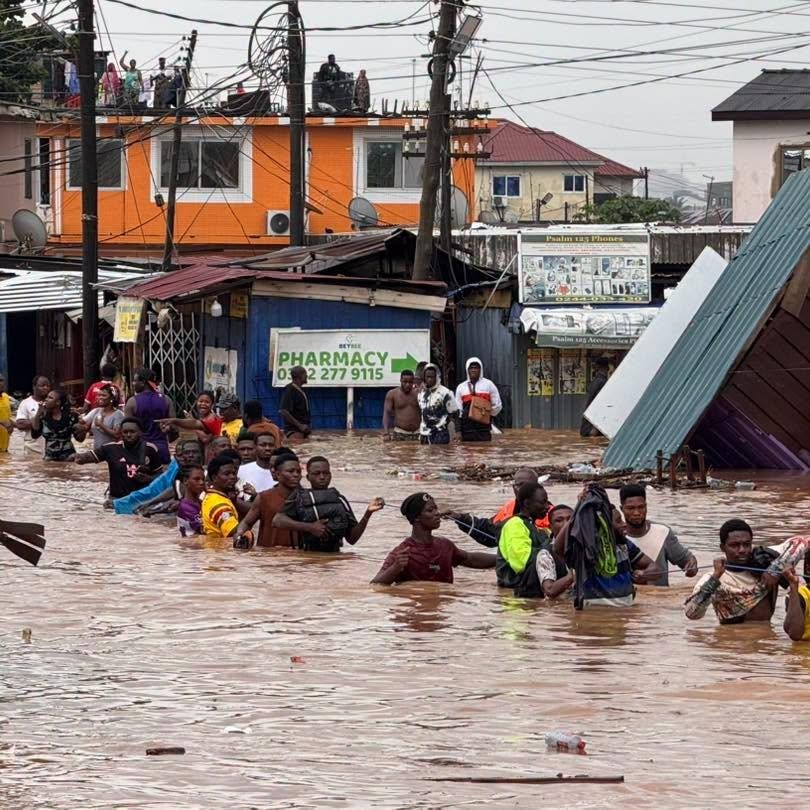
Torrential rains have again turned parts of Accra into disaster zones, and the city now faces the aftermath. The flood has displaced thousands, damaged homes and businesses, and raised fresh fears about cholera and other waterborne diseases.
This latest flood stands out because of the scale of the damage. As the waters recede, residents must clear debris, recover lost property, and deal with a major relief response from government. Accra now faces not only a flood crisis, but also a public health and recovery challenge.
A disaster with a wide reach
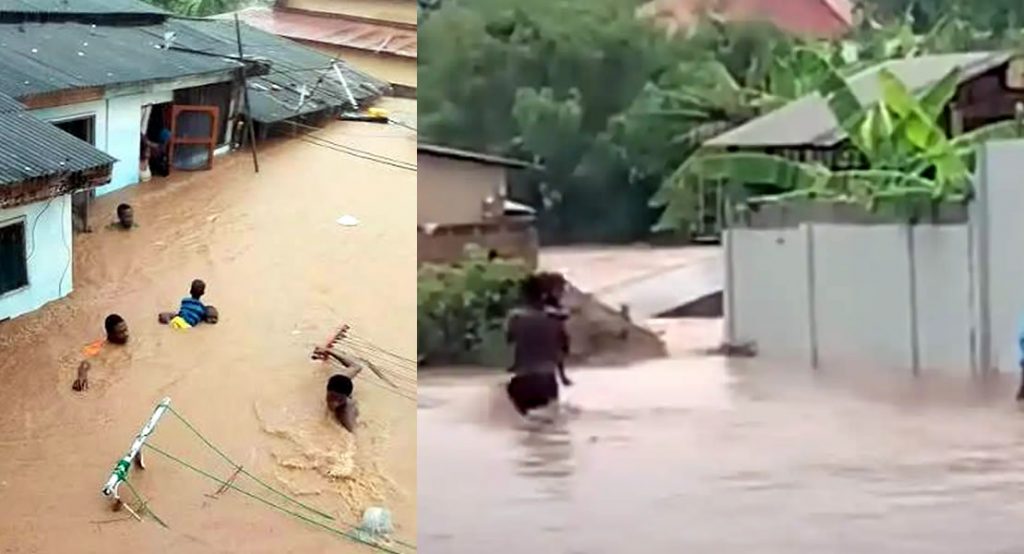
The flood hit low-lying and densely populated communities across Greater Accra. Areas such as Kwame Nkrumah Circle, Kaneshie, Alajo, Shiashie, Mallam, Weija, and Adabraka all suffered severe flooding. In some communities, water entered homes, blocked movement, and forced families to leave their properties.
Reports show that the disaster killed at least 12 to 13 people and displaced more than 38,000 residents across the region. In Adabraka alone, local leaders say more than 22,000 people and about 2,000 households suffered direct impact. Those figures show how fast heavy rain can turn into a major humanitarian crisis.
The flood also disrupted the morning rush hour and paralyzed normal economic activity. Workers could not reach offices, traders could not open shops, and transport systems came under heavy pressure. For a city that depends on daily movement and small-scale business, that kind of disruption creates immediate and lasting damage.
Homes and businesses suffer
The damage did not stop when the water began to recede. Families now clean flooded homes, replace lost items, and look for temporary shelter. For many households, the flood destroyed furniture, electronics, food supplies, and other essentials that may take months to replace.
Businesses also suffered heavy losses. Shops, markets, and commercial spaces in flood-prone areas lost stock and income, while traders faced another round of losses before they could recover from previous rains. When floodwater enters a store, the financial damage often goes beyond the visible mess.
The flood also damaged roads and strained public transit. Some routes became impassable, and transport systems struggled to function normally. In a city where many people depend on daily transport to earn a living, even a short disruption creates a long chain of problems.
A fire in the middle of the crisis
The flood disaster also exposed how quickly multiple emergencies can collide. As floodwaters rose, a major fire broke out at a rubber factory in Accra, adding more danger and economic loss to an already severe situation. That combination of flood and fire created chaos for residents and emergency responders.
This kind of incident shows how vulnerable the city becomes when infrastructure, drainage, and emergency systems all come under pressure at the same time. It also reminds the public that flooding is not an isolated problem. It can trigger fire risk, electrocution danger, and transport breakdowns.
That is why many residents now see the city’s flood problem as a systems failure. The rain may start the disaster, but poor planning and weak enforcement make it worse.
Government steps in
The government has responded with a major financial intervention. President John Dramani Mahama ordered immediate action, and the Ministry of Finance approved the release of GH¢350 million from the national Contingency Fund. Officials say GH¢150 million will support immediate humanitarian relief, including food, water, and temporary shelter.
The remaining funds will support structural flood mitigation, desilting, and emergency drain-clearing work. That shows an attempt to move beyond short-term relief and toward stronger prevention. It also shows that the disaster reached a scale that forced the state to treat flooding as more than a routine rainy-season problem.
Still, residents will judge the response by results, not announcements. They want faster drainage work, stronger enforcement, and fewer communities underwater when the next heavy rain arrives. Relief helps, but it cannot replace prevention.
Cholera fears grow
As floodwaters recede, another threat has emerged: disease. The Ministry of Health has warned about the risk of cholera and other waterborne illnesses after the floods left behind stagnant water, waste, and contamination in affected communities. That warning has made the aftermath even more serious.
Public health officers now face the consequences of residents dumping garbage into floodwaters and the spread of dirty water through neighborhoods. When drainage systems overflow and waste mixes with standing water, the risk of disease rises sharply. That turns a flood disaster into a possible health emergency.
This is why cleanup matters as much as rescue. Local assemblies must focus on water distribution, waste removal, and sanitation control to reduce the chance of an outbreak. If they delay, the city could face a second crisis after the flood.
The bigger question
The latest flood has again forced Accra to confront a hard truth: the city keeps paying for failures it has not fixed. Illegal structures, blocked waterways, weak enforcement, and poor drainage continue to make heavy rains more dangerous than they should be. Every flood exposes the same weak points.
That is why the real story is no longer only about rainfall. It is about what the city allows, what authorities ignore, and how much damage residents must absorb before real change happens. Accra cannot keep rebuilding after each storm without changing the system that keeps failing.
The government’s new relief package may soften the immediate blow, but it will not end the crisis on its own. For that, the city needs stronger planning, tighter enforcement, better sanitation, and a serious long-term flood strategy. Until then, the next heavy rain will bring the same fear all over again.


 English
  French