Kumasi’s Drug Crackdown Exposes a Bigger Fight
Ready to listen.
When police move into a neighborhood and come out with bags of suspected narcotics, arrested suspects, and stacks of evidence, the story goes beyond one operation. It becomes a warning about how deeply the drug trade can settle into ordinary communities before authorities step in. That is exactly what the latest Kumasi anti-drug sweep suggests.
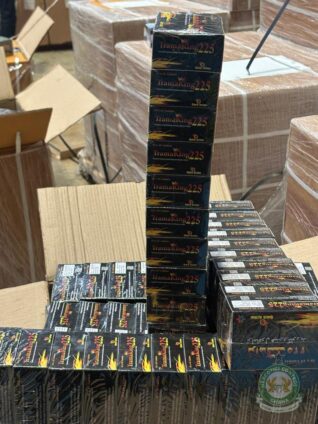
The Ghana Police Service says it arrested 54 suspects in intelligence-led operations across Kumasi and seized a large haul that included tramadol tablets, suspected narcotic drinks, dried leaves, mobile phones, casino jackpot machines, and unregistered motorcycles. The scale of the arrests shows that police are no longer chasing isolated offenders; they are trying to break up a wider network.
A city under pressure
Kumasi has appeared repeatedly in recent months as a center of drug-related enforcement, and that repetition matters. Police have carried out multiple crackdowns in the city this year, from operations in Alaba and Thinker to earlier raids that targeted suspected peddlers and drug hubs. Each operation tells the same basic story: the trade is persistent, organized, and difficult to fully uproot.
That persistence makes the latest arrests more than a routine police update. It shows that the problem is not fading between raids. Instead, it keeps resurfacing in different suburbs, which suggests that the market has both demand and distribution points that police must keep tracking.
The fact that the suspects include both Ghanaians and Malian nationals also points to a cross-border dimension that complicates enforcement. When a drug network stretches beyond one neighborhood or one nationality, the response has to stretch too.
Tramadol and the street trade
Among the items police say they recovered, tramadol stands out. The drug has become one of the most familiar names in Ghana’s ongoing conversation about substance misuse because it often sits at the center of illegal distribution, abuse, and health concerns.
That is why tramadol seizures carry more weight than a simple list of exhibits. They suggest a trade that reaches young people, transport operators, street vendors, and others who may see the drug as ordinary or harmless until the damage starts to show. Police say they also found dried leaves suspected to be narcotics, narcotic drinks, and processing materials, which makes the operation look less like casual possession and more like active preparation and sale.
The presence of foreign cigarettes, phones, and unregistered motorcycles further suggests movement, communication, and mobility around the trade. Those details matter because they help explain how drug markets survive: they do not depend on one seller in one corner. They rely on systems.
Why the raids keep coming
The repeated police operations in Kumasi suggest that enforcement alone may not be enough unless it keeps pace with the scale of the trade. Officers have already targeted hotspots such as Thinker Island and other identified communities, and the arrests keep building from one sweep to the next.
That is not a sign of failure by police alone. It is also a sign of how flexible the drug economy can be. When one location becomes risky, the trade shifts. When one group gets arrested, another often fills the gap. That makes anti-drug work as much about pressure and intelligence as it is about arrests.
For residents, the bigger concern is what the drug trade does to public safety. Communities that become known for peddling and abuse often face violence, theft, fear, and a decline in everyday trust. That is why anti-drug operations often receive support even from people who do not follow crime news closely.
What happens next
Police say all 54 suspects remain in custody and are assisting with investigations, and they will be taken before court when the probe is complete. That next step matters because it will show whether the state can convert a major swoop into actual disruption of the network.
The real test is not just how many people police arrest on one day. It is whether those arrests help reduce supply, weaken distribution, and discourage the markets that keep reappearing in city neighborhoods. If the crackdown leads to stronger prosecutions and more durable enforcement, it could make a real difference.
For now, the Kumasi operation stands as another reminder that the drug problem is not hidden in the background. It is visible, active, and still demanding a stronger response.