
The Growing Cost of Mobile Money Fraud
Ready to listen.
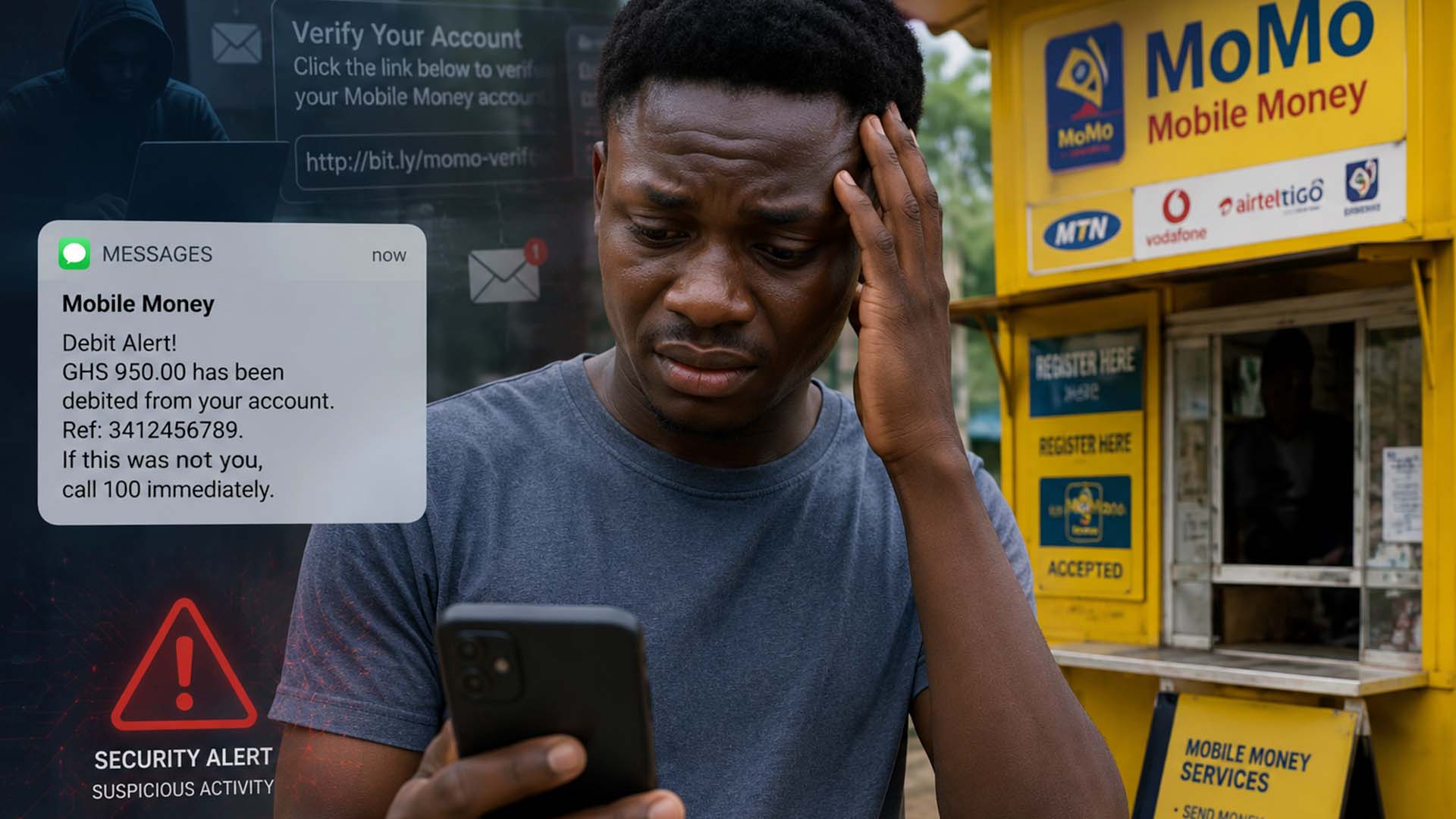
Mobile money has become one of the most useful tools in Ghana’s financial life, but it has also become one of the easiest ways for fraudsters to strike. According to INTERPOL’s African Cyberthreat Assessment Report 2026, Ghanaians lost an estimated $1.3 million to mobile money fraud in the first quarter of 2025 alone.
That figure is a warning about how fast digital fraud is growing alongside convenience. People now use mobile money for daily transfers, business payments, and emergency cash, which makes the platform valuable and attractive to scammers.
A fast-growing target
The rise in mobile money use has made everyday transactions easier, but it has also widened the pool of potential victims. Fraudsters rely on phishing, SIM-swap attacks, fake promotions, impersonation, and social engineering to trick users into handing over money or access.
INTERPOL says mobile money fraud is now the most common online scam reported across Africa, with 97 percent of countries in its member survey flagging it as a major cybercrime challenge. That places Ghana inside a wider continental pattern, not an isolated problem.
Criminal tactics are also changing. INTERPOL says cybercriminals are increasingly using AI to make scams more convincing and to scale attacks faster than before.
Why the losses matter
A loss of $1.3 million in just three months is not just a technical report. It means ordinary users, traders, and families are losing real money through a system they depend on every day.
Recent Ghanaian reporting has shown that digital fraud losses can rise quickly in a short period, with the financial sector and payment platforms accounting for a growing share of incidents.
That matters because mobile money is not a luxury service. For many Ghanaians, it is the main way they send cash, pay bills, and keep businesses moving. When fraud grows, trust weakens.
How scammers keep winning
Fraudsters often succeed because they create urgency. A user may get a fake alert, a suspicious link, or a message that looks like it came from a trusted contact. Once the victim reacts too quickly, the money is gone.
Some scams now use AI-generated messages or voice cloning, which makes them harder to spot. Others depend on simple deception, like fake promotions or requests for emergency funds from compromised accounts.
That is why awareness matters as much as technology. If users do not slow down and verify information, criminals keep finding easy entry points.
The bigger digital risk
Mobile money fraud is part of a broader cybercrime problem. INTERPOL and other reports show that online scams remain one of the most pressing digital threats across Africa, with losses touching financial services, identity systems, and consumer trust.
Ghana has responded with stronger reporting and more attention to cyber fraud, but the numbers show the threat is still growing. The challenge now is to keep users safe while preserving the convenience that made mobile money popular in the first place.
What users should remember
Mobile money is still useful, but it is not risk-free. Users need to verify numbers, avoid suspicious links, protect PINs, and treat urgent money requests with caution.
The lesson from the INTERPOL report is simple: convenience has a cost when fraudsters learn how to exploit it. The smarter users become, the harder it gets for scammers to win.



 English
  French