
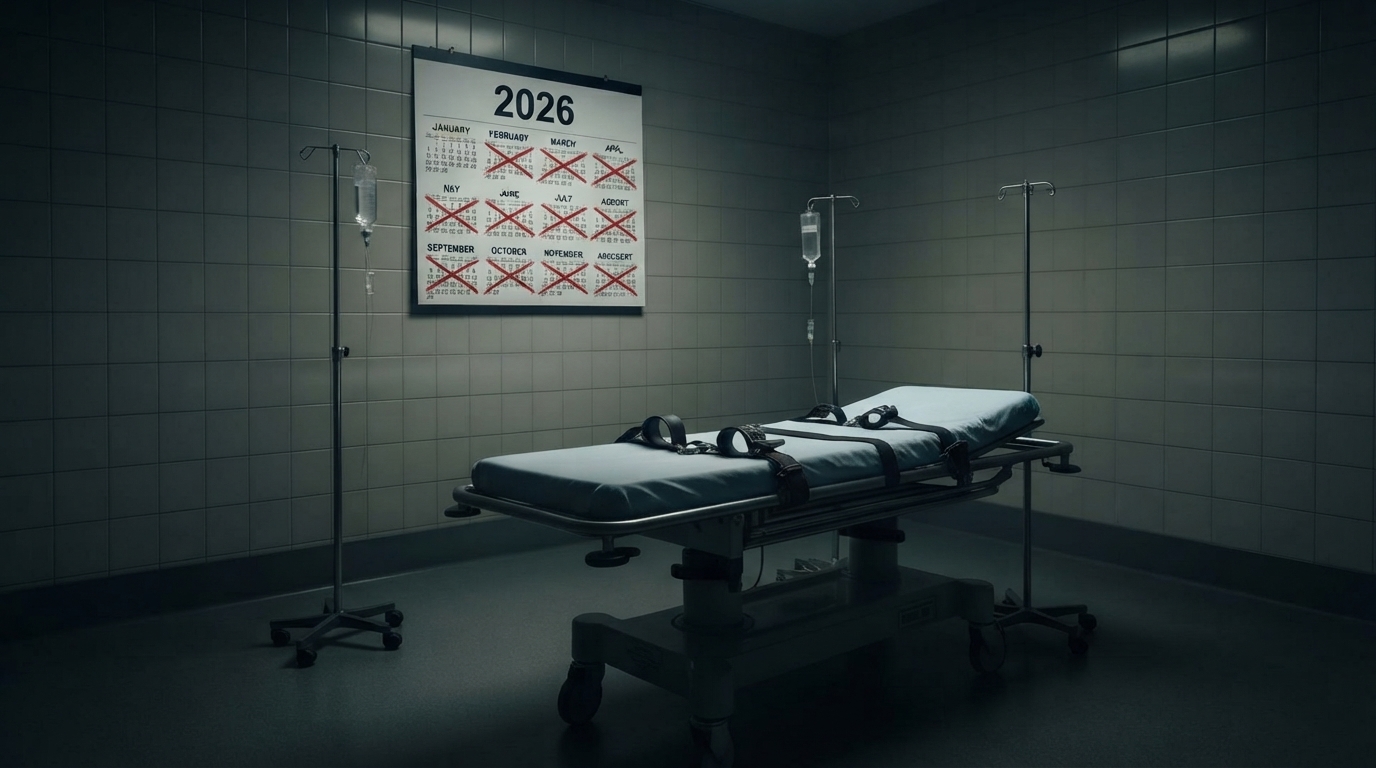
Tennessee’s attempt to execute Christa Gail Pike has failed after she survived two doses of pentobarbital, prompting Governor Bill Lee to pause the state’s remaining scheduled executions for 2026.
Pike, 50, was pronounced alive after prison officials administered two lethal injections at Riverbend Maximum Security Institution on September 30. Her lawyers said she retained a heartbeat, was audibly breathing and was later taken by ambulance for life-saving medical care.
The governor’s decision to halt further executions came as the state began confronting questions about what went wrong, Pike’s medical condition and the legality of any future attempt to carry out her death sentence.
The timeline of a failed execution
Pike had been sentenced to death for the 1995 murder of 19-year-old Colleen Slemmer. On the evening of September 30, Tennessee officials began the lethal-injection process using pentobarbital, a barbiturate intended to suppress the central nervous system and, at an execution-level dose, cause death.
Tennessee’s protocol allows officials to use a second set of pentobarbital-filled syringes if the prisoner does not die after the initial dose and a five-minute observation period. Pike was given the additional dose, but remained alive. Witness accounts cited by news outlets said she was snoring, breathing and at times responding physically after the injections.
Her legal team filed an emergency motion to stop the process, arguing that she had not lost consciousness and remained alive despite the two doses. She was then transported to hospital, where her lawyers said she was in critical condition and receiving life-saving treatment.
Why the drug may not have worked
Pentobarbital is ordinarily lethal at the concentrations used in single-drug executions if it enters the bloodstream as intended. An anaesthesiologist advising Pike’s defence team told the BBC that survival after the doses suggested the drug level in her circulation may not have reached the level required to cause death.
Pike’s lawyers said the execution team used at least seven needles while attempting to establish intravenous access. They also reported blistering and burning at the sites ultimately used, evidence that raised concern the drug may have leaked into surrounding tissue rather than being properly delivered through a vein.
That account has not yet been independently confirmed by a completed state investigation. It is, however, central to the questions now facing Tennessee: whether the IV placement was adequate, whether clinical monitoring detected a failed line and what procedures staff followed once the first dose did not result in death.
What happens to Pike now
Pike’s immediate medical condition remains the first issue. Reports after the failed execution said she was unconscious, on a ventilator and receiving life-saving care, but public information about her prognosis has been limited.
Her lawyers have asked for her death sentence to be commuted. A commutation would replace the death sentence with a different sentence, typically life imprisonment, but it would depend on action through Tennessee’s clemency process rather than occurring automatically because the execution failed.
The more complicated legal question is whether Tennessee can attempt another execution. There is no automatic rule that a failed execution permanently prevents a second attempt, but Pike’s lawyers are likely to argue that another attempt would violate constitutional protections against cruel and unusual punishment. Any further action could face extensive litigation, especially if the investigation finds procedural or medical failures.
Why Tennessee paused its remaining executions
The failed procedure did not occur in isolation. Tennessee has faced repeated concerns over its execution practices, including an earlier pause in executions after an independent review found that the state failed to follow its own protocols in several cases. The Pike case has now intensified scrutiny of how the state selects drugs, establishes IV access, trains staff and monitors executions in real time.
Governor Bill Lee’s decision to halt the remaining 2026 executions signals that the state recognises the seriousness of the incident. It also creates a practical window for investigators to review what happened before any further death warrants are carried out.
Critics of the death penalty say the episode demonstrates a basic contradiction: states rely on medical procedures while excluding the full level of medical transparency and professional accountability normally required in healthcare. Supporters of capital punishment may see the failure differently, as a breakdown in implementation rather than an argument against the sentence itself.
Whatever position one takes on capital punishment, the immediate facts are stark. An execution designed to end a person’s life did not do so after two doses of a drug meant to be fatal, leaving Pike critically ill and the state’s protocol under renewed investigation.
The wider debate
Pike’s survival is likely to become a reference point in the national debate over lethal injection. It raises practical questions about IV access, drug delivery, monitoring and transparency. It also raises a moral question: if the state cannot reliably conduct an execution without inflicting a prolonged and potentially painful medical crisis, should it retain the power to conduct executions at all?
For now, the story is unfinished. Pike’s medical outcome is uncertain, her lawyers are seeking commutation, and Tennessee has halted its scheduled executions for the rest of 2026. The investigation into why two pentobarbital doses failed will determine not only what happens in her case, but how the state’s entire execution system is judged.




 English
  French