
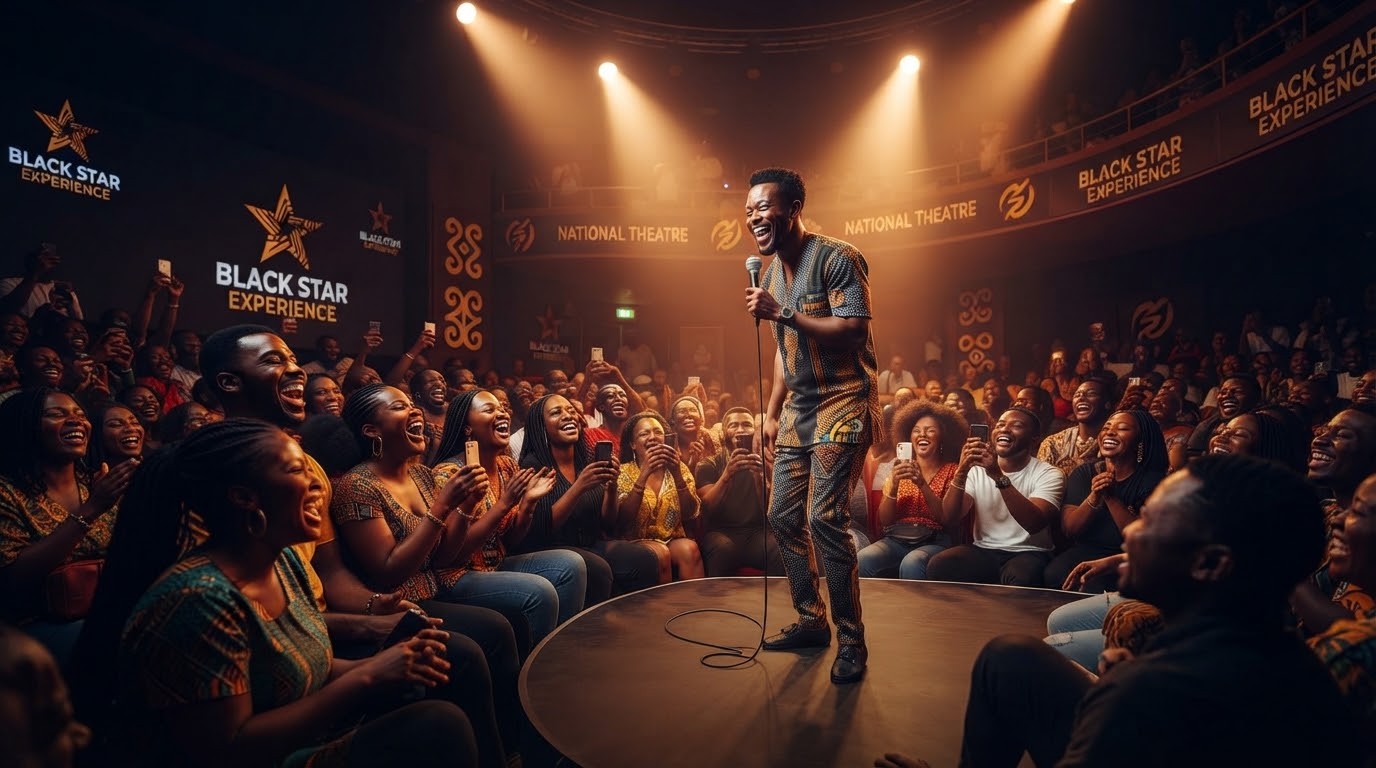
“You’re Ghana Laugh” is more than a tagline for a comedy show. It is a statement of intent from the Black Star Experience: that Ghanaian humour is distinct, valuable and ready to be packaged for audiences beyond Accra.
The phrase will headline the maiden Black Star Comedy Experience showcase on January 2, 2027, at the National Theatre, where comedians from Ghana, Nigeria and the United Kingdom will share a bill designed to test whether local stand-up can travel.
Behind the slogan is a broader ambition. Rex Omar, Head Coordinator of the Black Star Experience, says the initiative is meant to turn Ghanaian comedy from a popular local art form into a structured export industry, using live shows, recordings, digital audio and international showcases to build sustainable careers for comedians.
From Jubilee House to the National Theatre
The Black Star Comedy Experience was officially launched on September 24, 2026, at the forecourt of Jubilee House, in a ceremony that tied the initiative directly to the Office of the President and the broader Black Star Experience brand.
The maiden show, dubbed “You’re Ghana Laugh,” is scheduled for January 2, 2027, at the National Theatre in Accra. Organisers describe it as a cultural showcase designed to highlight the comedic talent Ghana has long produced but has struggled to package for international consumption.
The event is being organised by the Black Star Experience Secretariat in collaboration with It’s Live Entertainment and Laughing on Lex, signalling an attempt to blend state backing with private-sector production capacity.
Comedy as export, not just entertainment
Rex Omar has been clear about the objective. The Black Star Comedy Experience is meant to provide Ghanaian comedians with platforms to build sustainable careers and take their craft beyond Ghana’s borders, starting with the United Kingdom.
In his words, the initiative seeks to bridge the gap between Ghanaian and international comedy, creating opportunities for local acts to reach audiences who have never seen a Ghanaian headline a comedy club in London, Manchester or Birmingham.
That ambition rests on using live shows, recorded specials and digital audio to put Ghanaian comedians in front of international bookers, streaming platforms and festival curators, while building the business side of comedy so that talent is matched with management, marketing, legal support and distribution channels that can turn a viral clip into a viable income stream.
The lineup and the UK connection
The January 2 showcase is designed to demonstrate the export thesis in real time. The bill includes Ghana’s OB Amponsah and Lekzy DeComic, Nigeria’s Parrot Mouth and Klint Da Drunk, and UK-based comedians Eddie Kadi, Slim and Kojo Anim.
The presence of UK-based comedians is strategic. It signals an intention to use the show as a bridge to the British market, where there is already a significant Ghanaian and wider African diaspora audience.
By pairing Ghanaian and Nigerian acts with UK headliners, organisers are testing whether Ghanaian comedy can hold its own on international bills and whether diaspora audiences will respond to home-grown humour packaged at a professional level.
The infrastructure gap and the broader Black Star umbrella
For years, Ghanaian comedians have complained about limited international exposure, weak business structures, a fragmented local market and digital monetization gaps that leave viral clips without paid tours or licensing deals.
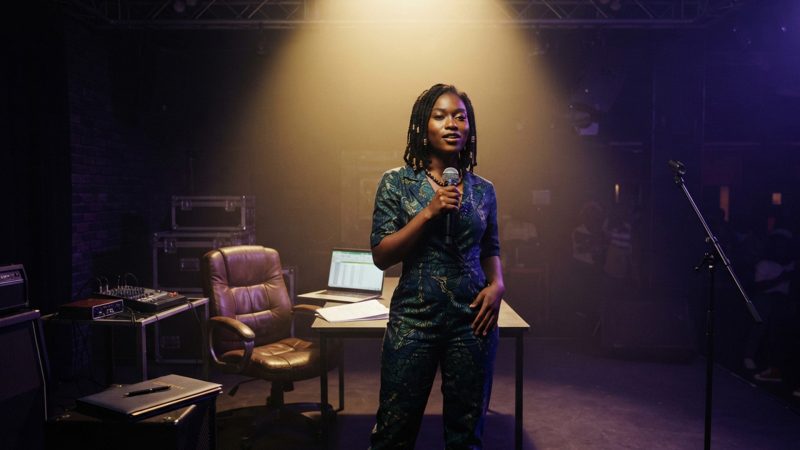
Rex Omar has stressed the need to invest in both the creative and business sides of comedy, insisting that comedians can only thrive when the industry around them is structured to support them.
The comedy initiative sits inside the Black Star Experience, Ghana’s flagship culture, arts and tourism brand launched in May 2025 with a mandate to make Ghana a preferred tourism destination and align the country’s brand with the world’s 20 most esteemed nations.
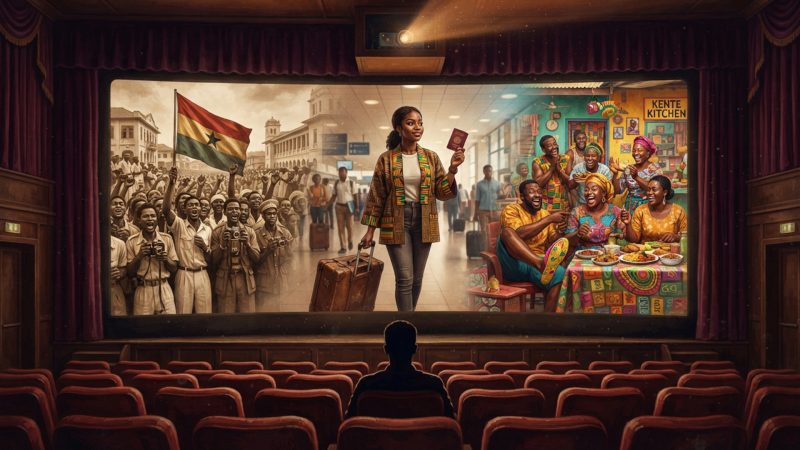
Within that framework, comedy is not just entertainment. It is a cultural product that can attract visitors, generate content, build Ghana’s soft power and create export revenue if packaged correctly.
The debate and the economics
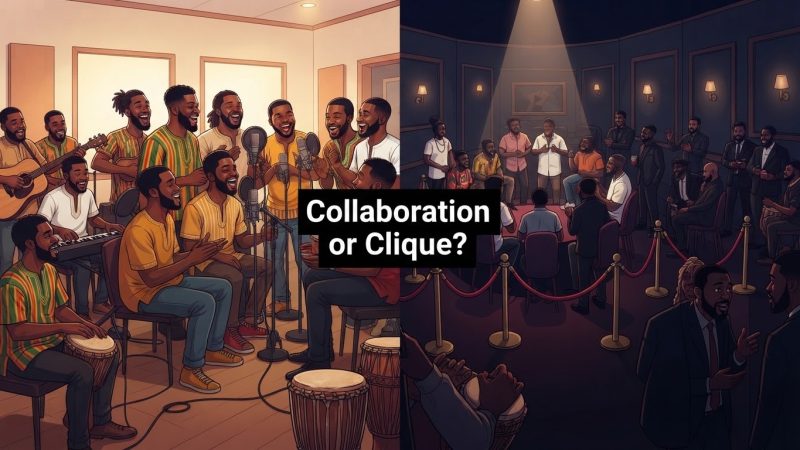
Not everyone is convinced that the Black Star Experience Secretariat is necessary. Critics argue that Ghana already has 13 agencies under the Ministry of Tourism, Culture and Creative Arts, and that adding another layer risks duplication and bureaucratic bloat.
Supporters counter that the creative economy has long been fragmented and underfunded, and that a dedicated, high-level unit is needed to coordinate policy, funding and international partnerships across music, film, fashion, comedy and tourism.
The question at the heart of the Black Star Comedy Experience is economic: can Ghana turn stand-up comedy into a viable export sector? Success would look like Ghanaian comedians headlining international tours, recorded specials licensed to streaming platforms, regular comedy festivals in Accra that draw international audiences and sponsors, and management and booking agencies emerging to represent Ghanaian talent globally.
What happens next
The January 2 showcase is the first data point. The real measure of success will be whether there are second and third editions of the Black Star Comedy Experience, whether Ghanaian comedians secure international bookings as a direct result of the initiative, and whether recorded specials, podcast deals or streaming partnerships emerge from the pipeline.
If the answer to those questions is yes, the Black Star Comedy Experience could become a model for how Ghana exports other forms of creative content. If the answer is no, it will join a long list of well-intentioned initiatives that launched with fanfare and faded without impact.
“You’re Ghana Laugh” is more than a tagline. It is a statement of intent: that Ghanaian humour is distinct, valuable and capable of travelling beyond Accra if the right structures are put in place.
The Black Star Comedy Experience is Ghana’s most explicit attempt yet to treat stand-up comedy as an export industry rather than a local pastime. Whether it succeeds will depend on whether the Secretariat can move from launch events to long-term infrastructure, from one-off shows to sustainable careers and from national pride to international demand.
 English
  French