
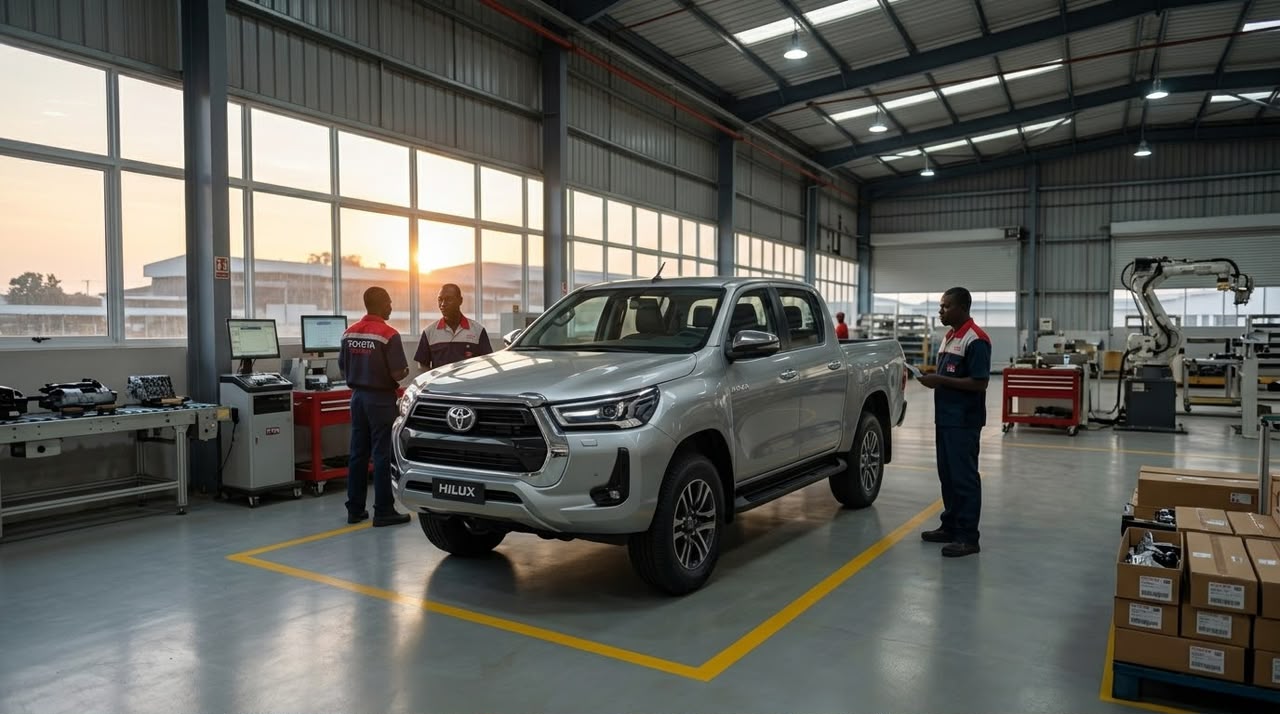
Toyota Tsusho Manufacturing Ghana is strengthening its presence in Ghana with the launch of the ninth-generation Hilux and new Land Cruiser 300, alongside expanded local assembly.
Toyota Tsusho Manufacturing Ghana has launched the ninth-generation Toyota Hilux and the new Toyota Land Cruiser 300 in Ghana, as part of efforts to expand the country’s automotive industry.
The company says the move includes investment in new Hilux assembly operations, reinforcing its commitment to local manufacturing and the wider Ghanaian automotive value chain.
For Ghana, the development is significant because vehicle assembly can create jobs, build technical skills and support local suppliers. For buyers, it raises questions about pricing, availability, after-sales service and the long-term value of locally assembled vehicles.
A new Hilux for Ghana
The ninth-generation Hilux is one of Toyota’s best-known pickup models, popular among businesses, farmers, construction firms, security services and families who need a durable vehicle.
Toyota has also introduced the new Land Cruiser 300, a premium SUV aimed at buyers seeking comfort, capability and strong resale value. The launch gives Ghanaian customers access to updated versions of two important models in Toyota’s lineup.
The company’s decision to expand Hilux assembly in Ghana suggests growing confidence in the local market and in the country’s automotive policy environment.
Jobs, skills and local industry
Local assembly is about more than putting vehicles together. It can create direct jobs in production, logistics, quality control, sales and after-sales service.
It can also support indirect jobs through suppliers of parts, tyres, batteries, paint, packaging, transport and maintenance services. Over time, a stronger assembly base can help build technical skills and industrial capacity.
For Ghana’s automotive industry, investment by an established global brand can encourage other manufacturers and suppliers to take the local market more seriously.
What buyers should know
Ghanaian buyers may benefit from improved availability of new vehicles, better access to genuine parts and stronger after-sales support. Locally assembled vehicles can also be easier to service when the necessary parts and trained technicians are available.
However, buyers should still compare prices carefully. Local assembly does not automatically mean a cheaper vehicle, especially where imported components, taxes, financing costs and exchange rates affect the final price.
Prospective buyers should ask dealers about warranty coverage, service intervals, parts availability, resale value and whether the vehicle is fully assembled locally or imported as a complete unit.
Ghana’s growing auto sector
Ghana has been trying to grow its automotive sector through policies that support local assembly and reduce reliance on imported used vehicles. Companies such as Toyota Tsusho Manufacturing Ghana are part of that broader effort.
The country also has local manufacturers such as Kantanka Automobile, which produces SUVs and pickups at its plant in Gomoa Mpota in the Central Region.
A stronger automotive sector could support job creation, skills development and industrial growth, but it will need consistent policy support, reliable infrastructure and a market that can afford new vehicles.
What businesses should watch
Fleet operators, transport companies, construction firms and agricultural businesses should pay attention to the new Hilux because pickup trucks remain important for commercial work.
The key questions are fuel efficiency, maintenance costs, payload capacity, durability and access to service centres. A vehicle that is reliable and easy to maintain can be more valuable over time than one with a lower upfront price.
Businesses should also monitor whether local assembly leads to better delivery times, stronger warranty support and more competitive financing options.