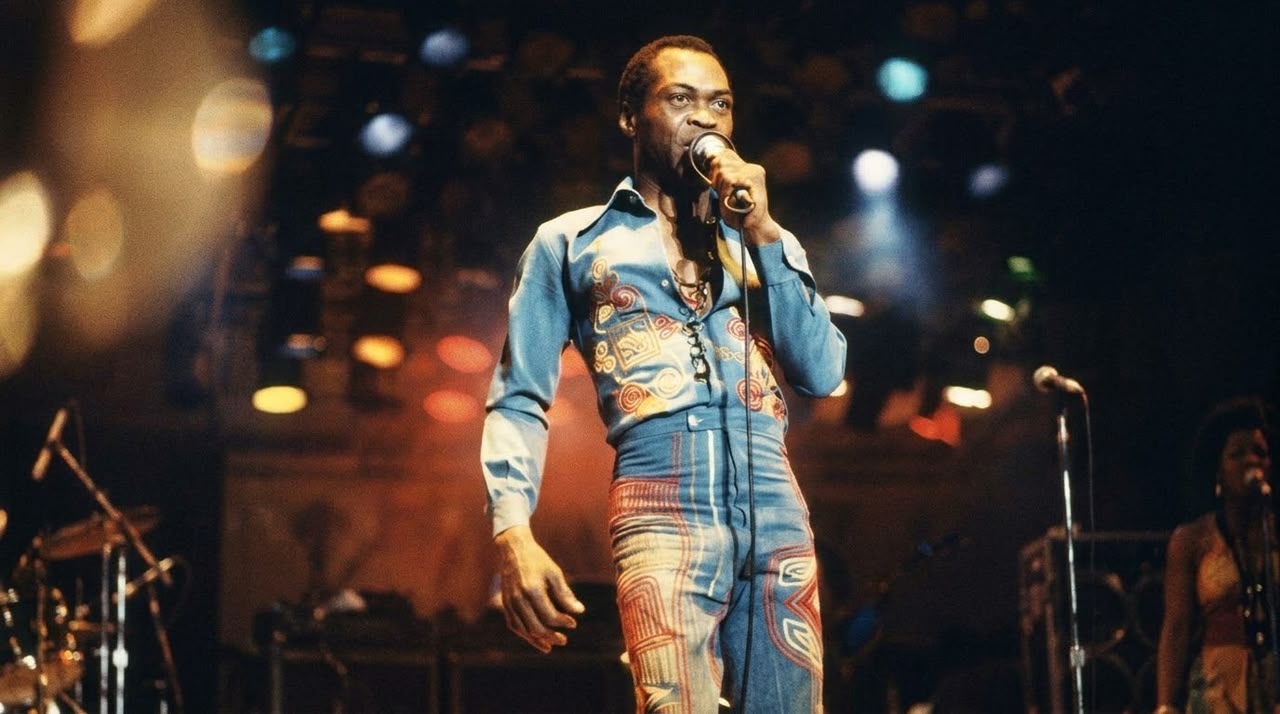
Fela Kuti spent his career making music that refused to sit quietly. Nearly three decades after his death, the Rock & Roll Hall of Fame has finally given that refusal a global stage.
The Nigerian Afrobeat pioneer was posthumously inducted into the 2026 Rock & Roll Hall of Fame on November 14 at the Peacock Theater in Los Angeles. He received the Early Influence Award, becoming the first African-born solo artist to enter the institution.
For an artist whose music challenged power, celebrated African identity and reshaped global sound, the recognition is significant. But it also raises a bigger question: why did it take so long?
More than an award
Fela Kuti was not simply a musician who happened to influence rock, jazz, funk and hip-hop. He was a political voice, a bandleader and a creator of a sound that carried the energy of Nigeria into the world.
His music blended highlife, jazz, funk and Yoruba rhythms into what became known as Afrobeat. It was danceable, but it was never just entertainment.
Fela used his songs to confront corruption, military rule and social injustice in Nigeria. That made his music dangerous as well as popular, and it helped define him as one of Africa’s most influential artists.
What the Rock Hall is recognising
The Rock & Roll Hall of Fame describes Fela as a key link between African-American music and the artists he inspired around the world.
That influence can be heard in the work of artists across genres, from hip-hop and electronic music to contemporary African pop. His rhythms, horns, political confidence and refusal to separate music from message continue to shape how people think about African sound.
The Early Influence Award is not a performance award. It recognises artists whose work helped shape the music that came after them.
In Fela’s case, that influence was never limited to one genre. It moved across continents, languages and generations.
Why this moment matters
Fela’s induction is historic because it places an African-born solo artist at the centre of an institution that has often been viewed through a Western rock lens.
It also comes at a time when African music is gaining more global visibility, from Afrobeats and amapiano to African artists appearing on major international stages.
But Fela’s recognition is different. He is not being celebrated because he fits into a current trend. He is being recognised because his sound helped create a path that many artists now follow.
That makes the honour less about nostalgia and more about correcting a gap in music history.
Sade’s place in the same class
Fela was not the only African-connected artist recognised in the 2026 class. Nigerian-born British singer Sade Adu was inducted in the Performer category alongside her bandmates Paul Spencer Denman, Andrew Hale and Stuart Matthewman.
Sade’s music blended soul, jazz, funk and sophisticated pop, creating a sound known for restraint, intimacy and emotional depth.
Her induction adds another layer to the story. It shows that African influence in global music is not limited to one sound, one generation or one style.