
Running From The Rainbow
Ready to listen.
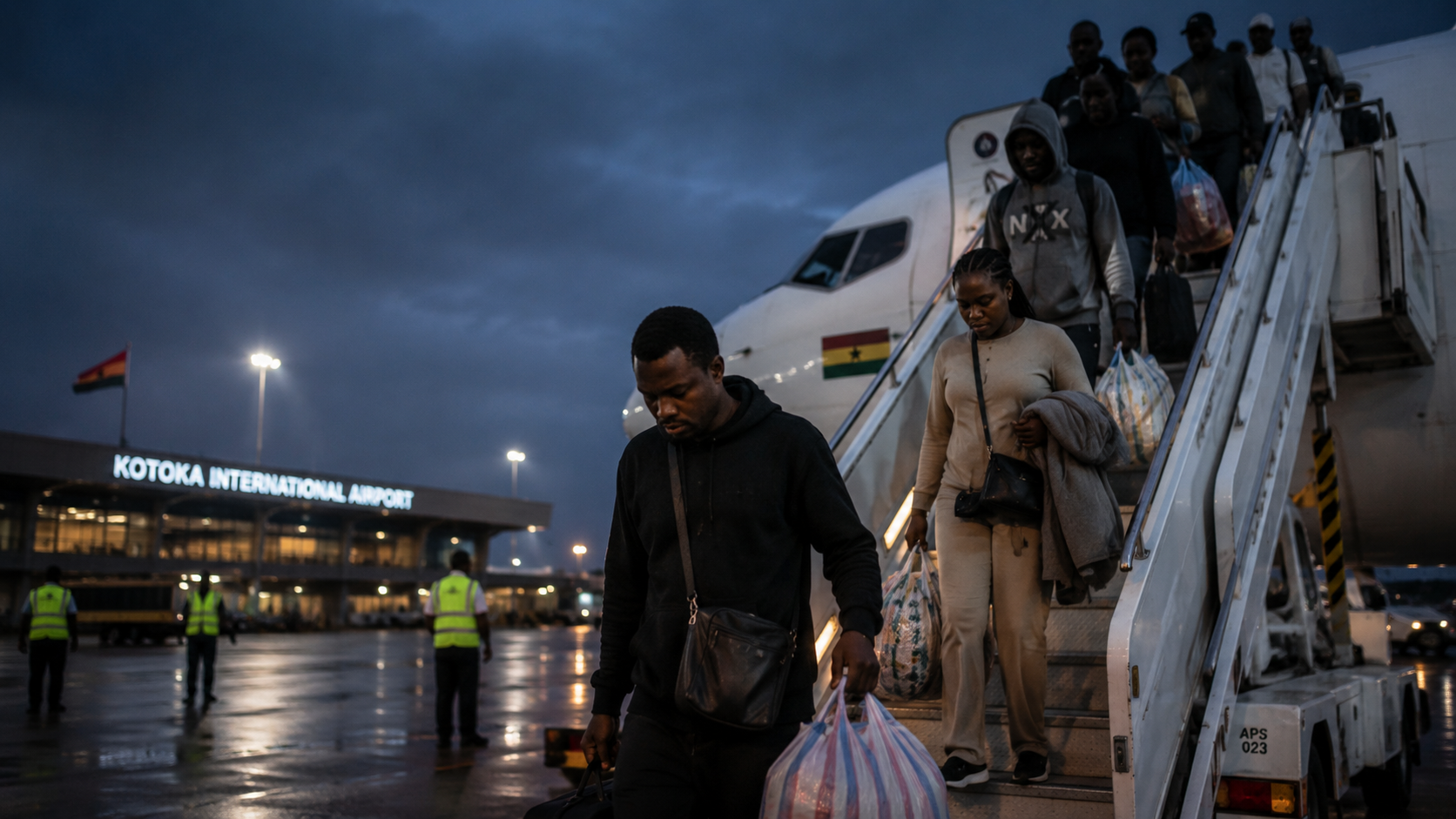
They came to South Africa chasing a dream. They left running for their lives. For years, Ghanaians saw South Africa as the land of opportunity, a place where hard work could build a future. Families saved for months just to send one relative to Johannesburg or Pretoria, believing gold paved the streets. Many also packed their bags with hope, believing they’d build businesses, send money home, and live peacefully among fellow Africans. But xenophobic attacks and anti-immigrant protests across the rainbow nation burned that dream to ashes.
On the morning of May 27, 2026, hundreds of Ghanaian nationals touched down on home soil, not returning from holidays or business trips, but fleeing a wave of xenophobic violence that had turned their lives upside down.
The Xenophobic Attacks
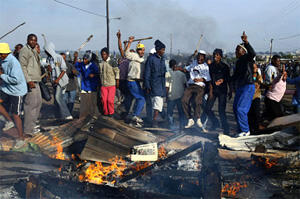
For weeks, tensions had been simmering across several South African provinces. Foreign nationals, many from Ghana, Nigeria, Zimbabwe, and Somalia, became targets of coordinated attacks and threats. Armed mobs descended on neighborhoods in Johannesburg, Pretoria, and Durban, targeting shops and homes owned by them. They moved street by street dragging them from their homes and demanding to see their South Africa identification documents. Armed mobs beat those who could not produce the documents and set their properties ablaze.
The attacks hit Ghanaians among the hardest. Within hours, fire reduced businesses built over a decade to ashes. Families who had lived peacefully in South Africa for years found themselves running for their lives. One trader from Kumasi, who had spent 15 years building a thriving business in Johannesburg, watched from a hiding spot in his ceiling as looters carried away everything he owned. He escaped with only the clothes on his back.
The Ghanaian government moved swiftly. Working with South African authorities and international partners, they organized a mass voluntary evacuation of citizens who wanted to leave. By early June, nearly 300 Ghanaians had been flown back to Accra, with more evacuation flights planned.
But the evacuation is only the beginning of the story.
Why Xenophobic Attacks Keep Repeating
Xenophobic attacks in South Africa are not new. South Africa has walked this road before. In 2008, mobs killed over 60 people. In 2015 and 2019, violence displaced thousands. Now, in 2026, history is repeating itself.History is repeating itself with the same fury and excuses.
It always starts the same way. Too many people can’t find work. Politicians blame foreigners to win votes. And frustrated people look for someone to take the anger out on. This time, social media made it worse. Videos that push people to attack spread fast. Hashtags calling for foreigners to leave trended for days across social media. Then violence exploded in the streets.
South Africa's economy is in serious trouble. Unemployment stands at 32 percent, jumping past 60 percent for young people. The country also has some of the worst inequality in the world. Daily electricity cuts, called loadshedding, shut down businesses nonstop. Food and rent prices keep rising while pay stays the same.
In this situation, foreign nationals become easy targets. Some politicians and community leaders spread a simple story: foreigners are stealing jobs, pushing prices higher, and taking over neighborhoods. Economists have proved this wrong many times while research shows immigrants in South Africa are more likely to create jobs than take them. But facts don't calm angry crowds.
The Diplomatic Fallout After The Attacks
Ghana has formally requested the African Union to establish a binding continental framework to protect African citizens living in other African countries. The South African government condemned the attacks but has historically struggled to prevent recurring violence. Human Rights Watch has documented that South Africa has experienced major waves of xenophobic attacks in 2008, 2015, 2019, and now 2026, a pattern that raises serious questions about the government's ability to protect foreign nationals.
The repeated targeting of Ghanaian nationals has strained diplomatic relations between Ghana and South Africa, even as both governments maintain an official cordiality. Many Ghanaians are now asking whether their government should impose stricter travel advisories or require South Africa to compensate victims before normalizing relations.
A Cycle That Must Break
The story of the Ghanaians who left South Africa is not just about one country failing to protect foreigners. It is about what happens when people have no hope and politicians use that pain for their own gain. It is about how politicians use desperation against innocent people, and about a continent that preaches unity but refuses to practice it.
The South African government's failure to adequately address the root causes of xenophobic violence ensures that these attacks will continue. The question is not whether xenophobia will erupt again in South Africa, but when, and how many more lives the flames will consume before the continent finds a better way.

 English
  French