
London’s New Home for Black Film
Ready to listen.
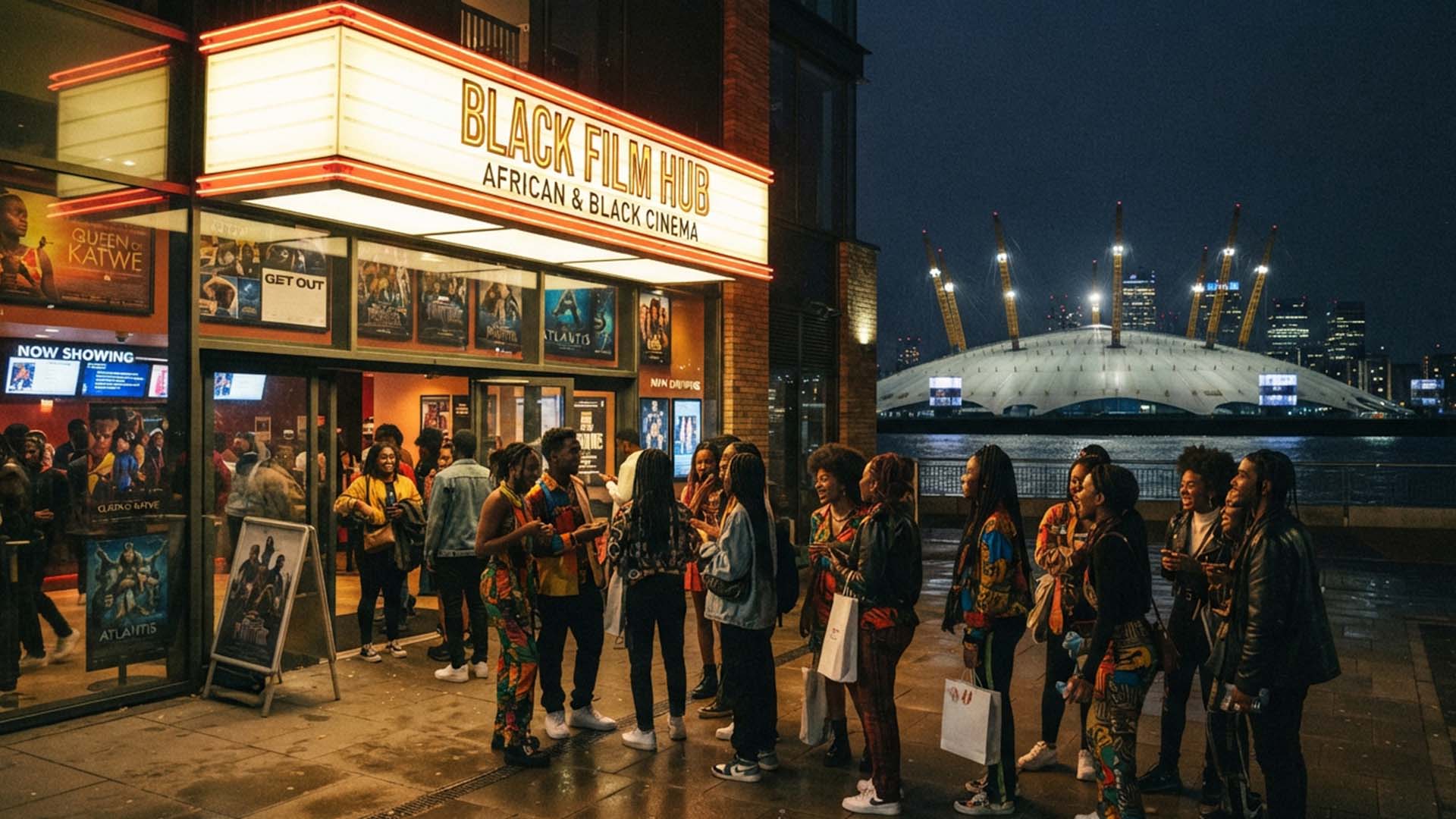
The lights go down. The screen flickers to life. For once, the story on the big screen does not treat Black lives as a subplot. It puts them at the centre. This is the moment a new London project is betting on, as the UK prepares to get its first-ever cinema hub dedicated to African and Black films.
The hub, part of the new EbonyLife Place London in the O2 Arena complex in Greenwich, will feature a 120-seat cinema, a 150-cover restaurant, a lounge, retail spaces and an art gallery. It is not just another venue. It is a test of whether a Black-led cultural hub in one of the world’s most competitive media markets can carve out permanent screen space for stories that mainstream cinemas often treat as niche.
From Lagos talk shows to a London landmark
The project is led by Nigerian media mogul Mo Abudu, who first gained attention with Moments with Mo, a talk show that ran for 11 seasons and featured global figures such as former US President Bill Clinton, former Secretary of State Hillary Clinton, musician Sir Elton John and boxing legend Muhammad Ali. She later founded EbonyLife TV, a pan-African lifestyle and entertainment channel, and produced or co-produced films such as Fifty, The Wedding Party and King of Boys, which helped push Nollywood into new territories and audiences.
Her work has not stayed within Nigeria. She has partnered with international players such as Netflix, AMC and Canal+ International, and has used events like the annual EbonyLife Icons Awards to spotlight African excellence in film, music, business and public service. The London project extends that strategy into physical space. Instead of relying only on streaming deals or occasional film festivals, Abudu is creating a permanent base in one of the world’s cultural capitals where African and Black films can be shown year‑round, alongside food, fashion and art.
Why a dedicated Black cinema hub matters in the UK
The UK has a large and diverse Black population, with strong Caribbean, African and British Black creative scenes. Yet mainstream cinema programming often marginalises Black and African titles, especially outside major festivals. Films end up with limited screenings, short runs or no theatrical release at all, pushing audiences straight to streaming or piracy.
A dedicated hub changes that dynamic. It gives distributors a guaranteed venue. It gives filmmakers a target for theatrical releases. It gives audiences a place where they can expect to see their stories on the big screen without having to hunt for special events. In that sense, EbonyLife Place London is not only about Nigeria or Nollywood. It is about creating infrastructure for Black and African cinema in a city that influences global culture, media and taste.
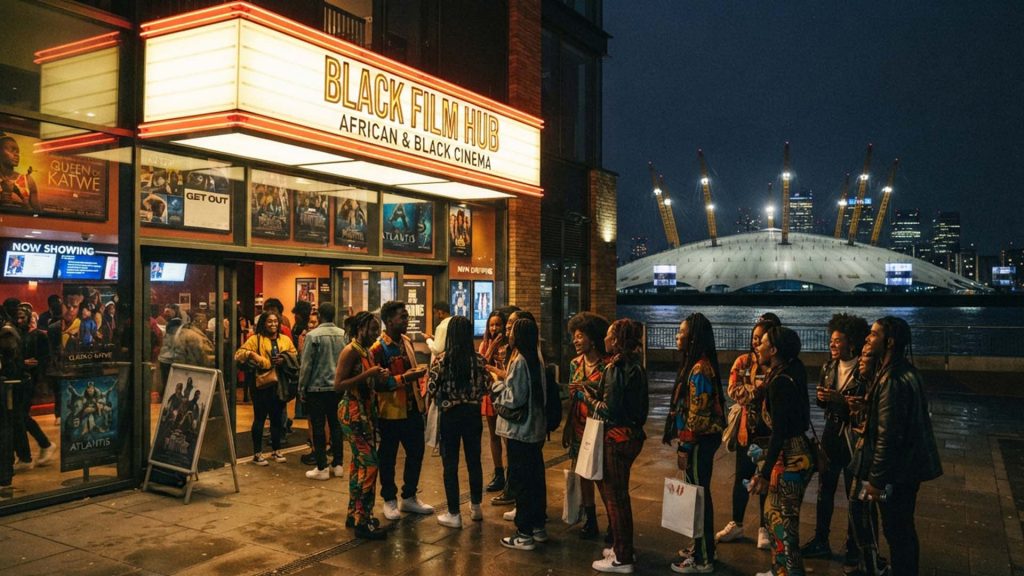
The global fight for screen space
This move lands in the middle of a wider global conversation about who controls screen space for Black and African stories. Streaming platforms have opened new doors, but they also concentrate power in a few tech companies that decide what gets promoted, licensed or commissioned. Film festivals offer visibility, but they are time‑limited and often skewed toward a narrow set of “festival‑friendly” titles.
A physical cinema hub adds another layer. It creates a home base that can host premieres and community screenings, run curated seasons focused on specific countries, genres or themes, and partner with schools, universities and cultural organisations for education and outreach. By anchoring this in London, the team behind the hub is betting that a permanent cultural space can shift perceptions and create demand that spills back into mainstream cinemas and streaming platforms.
A blueprint for diaspora cultural hubs
EbonyLife Place London is designed as more than a cinema. The inclusion of a restaurant, lounge, retail and gallery points to a model that blends entertainment, hospitality and culture. This mirrors similar diaspora projects around the world that combine food, music, film and art to create “third spaces” for communities.
For African and Black audiences in the UK, the hub offers a place to gather, celebrate and see themselves reflected on screen. For the wider public, it offers a curated entry point into African and Black creativity beyond stereotypes. For investors and policymakers, it signals that diaspora culture is not just a niche. It is a viable, scalable business model. If the London hub succeeds, it could inspire similar projects in other cities with large African and Black populations, from Paris to Toronto, from New York to Johannesburg.
What success would look like
The real test will not be the opening night. It will be whether the hub can sustain regular programming of African and Black films across the year, attract both diaspora audiences and wider UK cinemagoers, build partnerships with distributors, festivals and streaming services, and support new talent and help films move from the hub to broader release.
If it does, EbonyLife Place London will be more than a landmark for Mo Abudu. It will be a proof of concept for a global network of Black and African cultural hubs that control their own screens, tell their own stories and capture more of the value they create.

 English
  French