
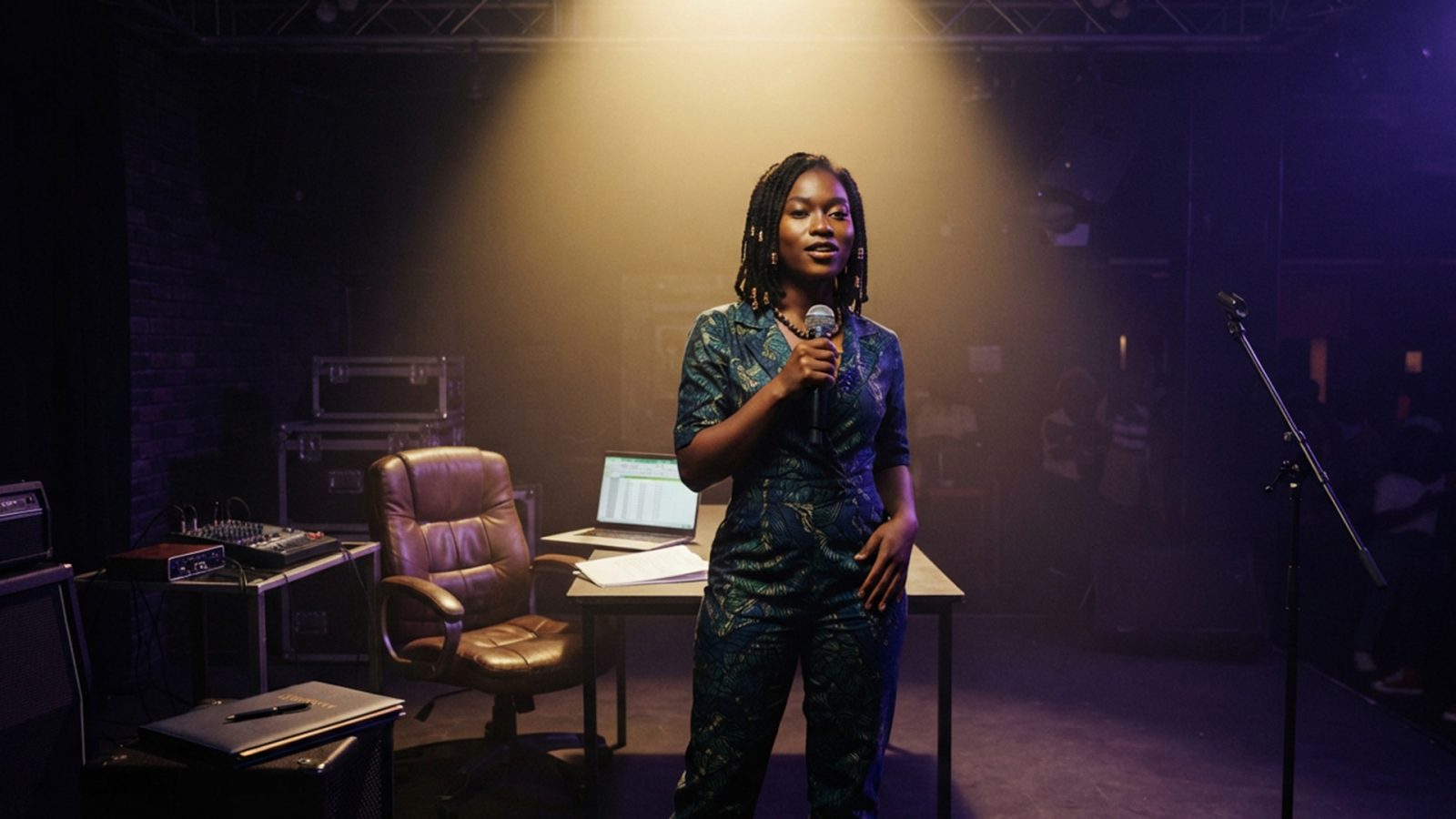
Ghana’s music industry knows how to celebrate women when the moment is right. A song catches on. A dance challenge goes viral. An award nomination arrives. A singer steps onto a major stage in a headline-grabbing outfit. For a few days or weeks, the industry speaks loudly about the female artiste at the centre of the moment.
But attention is not the same as support. That distinction returned to public conversation after Wendy Shay said Ghana’s music industry does not favour women. In a post on X on September 14, the hitmaker said she had always known women faced challenges in the industry, but that what she had recently heard made the situation feel more serious. She did not name the individuals or disclose the specific incident behind her reaction. Her message was brief. The questions it raised are not.
Visibility can hide a support gap
Ghana has no shortage of talented female artistes. Women have delivered some of the country’s biggest songs, led major performances and shaped conversations around Afrobeats, highlife, gospel, rap, dancehall and pop. Yet a woman’s visibility in music does not automatically mean she has access to the support required to build a long career.
A hit song may bring streams, bookings and attention. It does not automatically provide a reliable team, a fair contract, a capable manager, long-term marketing, legal advice, tour support or the money needed to fund the next release. Those gaps affect many emerging artistes, but female artistes often face extra pressures around image, public behaviour, personal relationships and online scrutiny. The industry may celebrate a woman’s success while leaving her to manage the cost of sustaining it alone.
Wendy Shay’s post does not prove that every female artiste has the same experience. But it points to a wider conversation about whether Ghana’s music business gives women equal room to build, make mistakes, evolve and remain visible beyond one successful season.
Hype does not build careers
A second conversation in Ghanaian music offers a useful clue. Emerging musician Sosa Kidd has called on the industry to stop treating upcoming artistes as short-term hype and start investing in them over the long term. He says many young musicians face pressure to deliver polished, commercial hits without receiving the mentorship, management, distribution systems or financial backing that sustainable careers require.
His point applies across the industry, but it is especially important when discussing women. When the industry views an artiste mainly as a moment, it creates fragile careers. The artiste must keep chasing the next viral release, the next trend, the next attention-grabbing appearance or the next song that might force the public to look again. That cycle can be exhausting for anyone. It can become even harsher for women when the conversation around their work quickly shifts from the music to their bodies, relationships, fashion choices or perceived attitude.
A healthy music ecosystem should invest before an artiste becomes a headline and continue investing after public attention moves elsewhere. That means developing talent patiently. It means helping artistes understand contracts, pricing, branding, publishing, live performance, distribution and audience building. It means creating teams that protect creative work rather than simply extracting value from it.
Women often carry a different kind of pressure
Male artistes are not free from criticism. Ghanaian music can be unforgiving to anyone who misses a release, flops on a song or falls out of public favour. But women often carry an additional burden: they are expected to succeed musically while also satisfying a narrow and constantly changing idea of what a female star should look like, say, wear and tolerate.
If a woman is confident, people may call her arrogant. If she is private, they may call her distant. If she speaks forcefully about unfair treatment, they may reduce the issue to drama. If she changes her sound or image, she can face questions that male artistes rarely receive with the same intensity.
These pressures do not always appear in formal contracts or industry reports. They show up in comment sections, backstage expectations, media framing, booking decisions and the way female artistes must repeatedly prove that they belong. The result is that some women do not only have to make good music. They have to manage public judgement as a full-time part of the job.
Investment means more than money
When people say the industry must invest in female artistes, they often mean money. Money matters. Recording, videos, publicity, styling, rehearsals, distribution, promotion and touring all cost money. But investment also means structure.
It means more women in decision-making roles at labels, radio stations, streaming teams, management companies, event firms and award institutions. It means safe reporting channels for harassment and professional misconduct. It means contracts that protect artistes. It means promoters who book women as headline acts, not only as early performers or decoration on an otherwise male-heavy bill.
It also means allowing women to develop at their own pace. Not every artiste should be forced to sound the same, dress the same or become controversial to remain marketable. A music industry that only supports women when they fit a narrow commercial image does not support women. It supports a product.
This is where the conversation must move beyond sympathy. Female artistes do not need the industry to occasionally praise their resilience. They need systems that reduce the need to be resilient in the first place.
The business must answer the question
Wendy Shay’s statement placed a difficult question before Ghana’s music business: if the industry does not favour women, what exactly will it change? The answer cannot only be more congratulatory posts on International Women’s Day, more panel discussions or more applause when a woman wins an award. Those things have value, but they do not pay for a video, negotiate a fair contract, protect an artiste from abuse, secure a distribution deal or create a sustainable touring schedule.
The industry needs to ask whether its investment patterns match its public praise. It needs to look at who controls resources, who receives promotional budgets, who gets prime performance slots, who is given time to develop and who is expected to succeed immediately or disappear. Sosa Kidd’s warning about hype captures the problem clearly. A music industry that demands finished stars without investing in the process will keep producing short-lived moments instead of long-lasting careers.
For women, the stakes are even higher. When the system offers less room for error and more pressure to be perfect, a lack of investment becomes a form of exclusion.
Beyond applause
Wendy Shay has built a visible career with hit songs and major industry appearances. Her decision to speak up, even without naming the incident behind her frustration, has reopened a conversation that Ghana’s music industry cannot dismiss as another social-media moment.
The issue is bigger than one artiste. It is about whether female musicians can enter the industry with talent and ambition, then find the same seriousness around development, money, safety, management and opportunity that the industry claims to offer everyone else.
Ghanaian music does not lack women with the talent to lead it.
The question is whether the business behind the music will give them enough support to last.

 French
  English