
Ghana has received a major vote of confidence from the International Monetary Fund, which now expects the economy to grow faster in 2026 and inflation to fall further by year-end.
The IMF has raised its growth forecast for Ghana in 2026 to 5.7%, up from 4.6% projected in April. It also expects inflation to end the year at 4.8%, down sharply from its earlier 7.9% forecast.
The revised outlook comes from the IMF’s latest World Economic Outlook, released during the IMF/World Bank Annual Meetings in Bangkok, Thailand. It is higher than the government’s 4.8% growth estimate in the 2026 Budget.
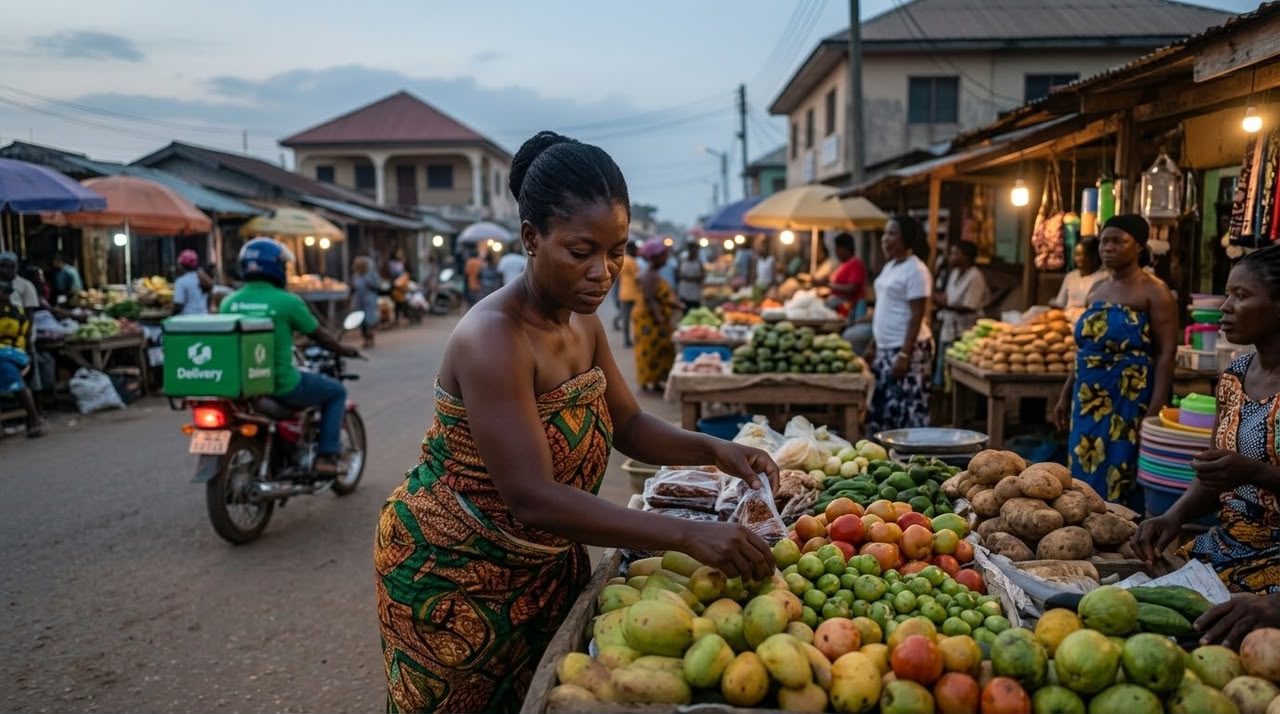
For households, the forecast matters because inflation affects the prices of food, transport and other essentials, while growth can influence jobs, business activity and access to credit. But the benefits will depend on whether the stronger outlook translates into lower living costs and more opportunities.
Why the IMF is more optimistic
The Fund’s improved outlook reflects Ghana’s commitment to fiscal discipline, spending aimed at supporting growth and strong export earnings, particularly from gold. Higher gold earnings have helped improve the trade balance and build economic buffers.
Ghana’s commitment to targets under the IMF’s Policy Coordination Instrument has also contributed to the revised outlook. The IMF, however, has raised concerns about the country’s reliance on gold exports and urged the government to diversify export earnings to reduce exposure to changes in gold prices.
The economy grew by 6.0% year-on-year in the second quarter of 2026, bringing first-half growth to 6.2%, according to the Ghana Statistical Service.
What the new numbers mean
The IMF now expects Ghana’s economy to grow by 5.7% in 2026, before moderating to 5.2% in 2027. The 2026 forecast is 0.9 percentage points above the government’s estimate in the 2026 Budget.
The Fund also expects inflation to fall to 4.8% by the end of 2026, below the government and Bank of Ghana target range of 6% to 10%. Ghana’s inflation rate stood at 5.2% in September, suggesting further easing in price pressures would be needed to meet the IMF’s year-end forecast.
If the projection holds, Ghana would record single-digit year-end inflation for a second consecutive year, following a similar outcome in 2025.
What it could mean for households
Lower inflation can help households by slowing the pace at which prices rise, making it easier to plan for food, transport and school-related costs. It can also give the Bank of Ghana more room to maintain or reduce borrowing costs, which may eventually make credit cheaper for businesses and consumers.
But the impact will not be automatic. Households will only feel better off if wages keep pace with prices, businesses pass on savings from lower borrowing costs and job creation improves. A stronger growth forecast is a positive signal, not a guarantee that every household will immediately feel relief.
What it could mean for businesses
A 5.7% growth forecast can improve confidence among investors, lenders and employers. Businesses may find it easier to plan expansion, hire workers and access credit if they believe demand and economic stability are improving.
The outlook is especially important for Ghana as it moves beyond its IMF-supported reform programme. Continued fiscal discipline, predictable policies and reforms that improve the investment climate will be key to turning stronger projections into sustained job creation.
The improved outlook also comes alongside recent upgrades to Ghana’s credit ratings by Moody’s and Standard & Poor’s, which could help improve Ghana’s borrowing conditions and potentially lower the cost of future financing.
The risks that remain
The IMF has warned that the factors supporting resilience have limits, with growth risks tilted to the downside. Further escalation of conflicts, renewed trade tensions, fiscal vulnerabilities and a reassessment of expectations around artificial intelligence could weaken economic activity.
Ghana’s reliance on gold exports remains a key vulnerability. The IMF has urged the government to diversify export earnings to reduce the economy’s exposure to changes in gold prices on the international market.
The bottom line
The IMF’s revised forecast is good news for Ghana’s economic outlook. It suggests stronger growth and lower inflation than previously expected, even as global pressures remain.
For households, the practical question is whether the improvement will show up in everyday life: steadier prices, cheaper credit and more work opportunities. For businesses and policymakers, the challenge is to turn a better forecast into investments, jobs and incomes that people can feel.


 English
  French