
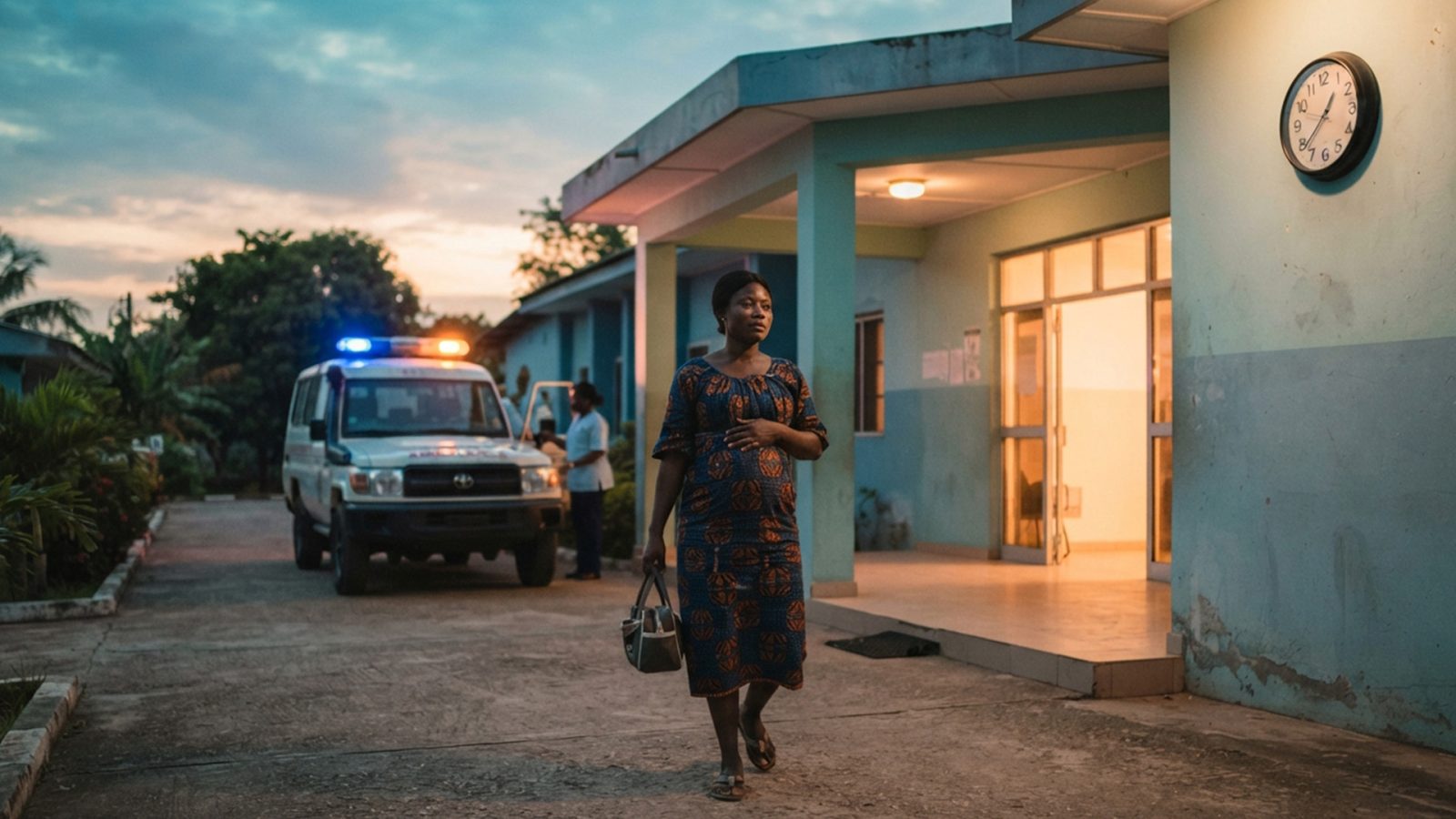
Ghana loses one woman every three hours to pregnancy- or childbirth-related causes, according to the United Nations Population Fund (UNFPA). That means the country loses roughly eight mothers every day, often from complications that health systems can prevent or manage when women receive care early and quickly enough.
Government has responded with the Presidential Initiative on Maternal Health Emergency Response, known as PRIMER, a five-year programme that aims to reduce preventable maternal and newborn deaths. The initiative will target gaps in emergency referrals, transport, blood supply, medicines, staffing, equipment, health data and accountability.
Officials now face a difficult task: turning a national commitment into faster, safer care for women in distress.
A crisis measured in hours
UNFPA has described maternal mortality in Ghana as a crisis that requires urgent national attention. The agency says Ghana records about one maternal death every three hours, a rate that demands the same urgency the country would apply to a major road disaster or infectious-disease emergency.
Deputy Health Minister Dr Grace Ayensu-Danquah says Ghana’s maternal mortality rate has stalled at 234 deaths per 100,000 live births, despite previous gains. Health facilities recorded 965 institutional maternal deaths in 2025, she said.
The figures show that maternal deaths do not occur only in remote communities or outside formal health care. Many women die after health facilities refer them for higher-level treatment, exposing weaknesses in the path from a clinic to a hospital capable of managing severe complications.
At Komfo Anokye Teaching Hospital, only 8.6 percent of women who died in 2025 came from the Ashanti Region, while referrals accounted for about 80 percent of maternal deaths recorded there, Dr Ayensu-Danquah said. The statistic points to a wider system problem: primary facilities must identify danger early, stabilise patients, secure transport and communicate rapidly with referral hospitals.
PRIMER targets the gaps between care and survival
PRIMER does not focus only on maternity wards. It brings together health, local government, transport, energy, finance, traditional leadership, faith groups, civil society and private-sector partners because a woman’s survival can depend on systems outside a hospital.
A woman experiencing heavy bleeding cannot wait for an ambulance to arrive from another district. A referral hospital cannot provide emergency surgery without dependable electricity, blood, medicines, equipment and trained staff. A family cannot make the right decision quickly if it does not recognise danger signs or know where to seek urgent care.
PRIMER aims to strengthen those links. It will work on emergency transport and referral systems, improve access to blood and essential medicines, strengthen health-worker capacity, improve maternal and perinatal death surveillance, and involve communities in identifying pregnancy danger signs and preparing for childbirth emergencies.
Vice-President Professor Jane Naana Opoku-Agyemang has urged the initiative to focus on outcomes, not attendance figures. Women must not only enter health facilities; they must return home safely with their babies, she said.
That is the standard PRIMER must meet.
Focus where deaths concentrate
Government will initially direct PRIMER towards the areas carrying the heaviest burden. Dr Ayensu-Danquah says 70 percent of Ghana’s maternal deaths occur in 11 regions, with the Ashanti Region recording the highest number, followed by Greater Accra.
PRIMER will begin work across 11 regions, 164 districts and 27 priority health facilities. This targeted approach can help government direct ambulances, trained staff, blood services, drugs and monitoring towards districts where failures cost the most lives.
But geographic targeting must not create a two-tier system where women outside priority districts wait for help. Ghana will need to use PRIMER’s early lessons to strengthen maternity care nationally, especially in facilities that handle high-risk pregnancies or receive emergency referrals.
Accountability after every preventable death
The word “preventable” matters. It does not mean health workers alone carry the blame when a mother dies. It means the country must examine what failed before, during and after the emergency. Did the woman attend antenatal care? Did staff identify warning signs? Did the clinic have medicines? Did transport arrive? Did the referral hospital have blood, staff, theatre space and electricity?
Dr Nii Moi Thompson, Chairman of the National Development Planning Commission, has argued that Ghana must treat preventable maternal deaths as failures that require immediate accountability.
PRIMER will strengthen maternal and perinatal death surveillance and response systems, improve data quality and support high-level reviews of results. Those reviews must do more than count deaths. They must lead to specific fixes: a repaired ambulance, a stocked blood bank, a functioning theatre, a better referral protocol or a health facility with enough staff to manage emergencies.
Without that follow-through, accountability becomes another meeting. With it, data can become a tool for saving lives.
A target Ghana can measure
PRIMER’s clinical and operational pillar aims to reduce maternal mortality by 20 percent each year over the next three years. The target gives government a clear benchmark, but it also creates a responsibility to publish results regularly.
Families should be able to see whether their districts have improved emergency transport, whether facilities have adequate blood supplies, whether high-risk women are reaching referral hospitals faster and whether maternal deaths are falling where the programme operates.
The country should not measure success by the size of the launch or the number of partners on a banner. It should measure success in survival: fewer emergency delays, fewer avoidable deaths and more mothers leaving hospitals with healthy babies.
The emergency begins now
No woman should die because a clinic could not arrange transport. No woman should die because a hospital had no blood, a theatre had no power or a referral came too late. No family should leave a maternity ward grieving because systems that should have worked did not.
PRIMER gives Ghana an opportunity to treat maternal mortality as the national emergency it is. It recognises that safe childbirth requires more than doctors and midwives. It requires working roads, ambulances, reliable electricity, stocked blood banks, trained staff, community awareness and leaders willing to act when systems fail.
The initiative has started. The next measure is simple.
When a woman goes into labour in danger, will Ghana’s health system move fast enough to bring her home safely with her baby?


 French
  English