Hyundai Motor and Kia are developing technology that could change how cars respond in the final moments before a crash. Instead of relying only on airbags and seatbelts after impact, the system is designed to identify vulnerable passengers and steer the vehicle away from them when a collision cannot be avoided.
The technology is still at the patent stage and has not yet been confirmed for production vehicles. Even so, it points to a growing shift in vehicle safety: carmakers are increasingly using sensors, cameras and artificial intelligence to reduce harm before a crash happens.
For families, school-transport operators and anyone concerned about road safety, the development raises an important question: can cars do more to protect the people least able to protect themselves?
How the system works
The technology uses information from sensors and cameras to assess passenger seating positions and the vehicles around it. When a collision is expected, it can adjust steering, braking and acceleration to move the point of impact away from the side of the car carrying children, elderly passengers or people with disabilities.
In a rear-end collision, the system can assess the speed, acceleration and following distance of the vehicle behind. In a side collision, it can consider the position of passengers, vehicles in the opposite lane and the distance to vehicles ahead.
The aim is not to make the car disappear from danger. Rather, it is to reduce the severity of an unavoidable crash by directing the impact away from the people most at risk.
Why children are the focus
Children are often more vulnerable in crashes because of their size, seating position and the way impact forces affect smaller bodies. A collision that may cause limited injury to an adult can be far more serious for a child seated in the back seat.
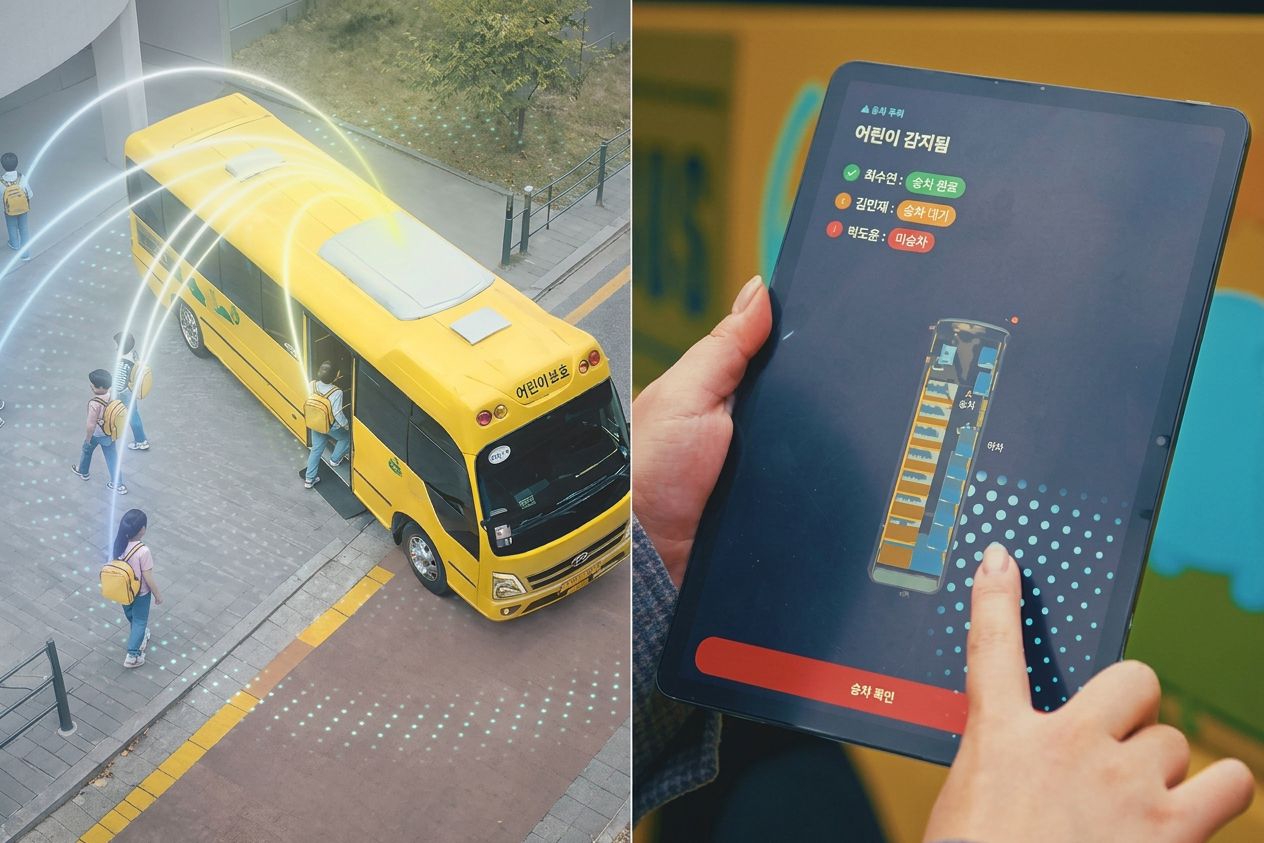
Hyundai and Kia’s proposed system is designed to recognise these passengers and prioritise their protection. It may use an in-cabin screen or camera-based analysis to identify where a child is seated, then direct the Rear Collision Avoidance Assist system or autonomous-driving system to control the vehicle’s movement.
The idea is especially relevant for families, school buses, ride-hailing services and other vehicles that regularly carry children or passengers who need additional protection.
A shift in vehicle safety
For decades, vehicle safety has focused mainly on what happens during and after a crash. Seatbelts restrain passengers, airbags reduce impact and crumple zones absorb some of the force.
Hyundai and Kia’s technology represents a different approach. It tries to act before the crash, using data from the vehicle’s surroundings to make split-second decisions that could reduce injury.
This does not mean airbags and seatbelts are no longer important. They remain essential. But the new technology suggests that future safety systems may work alongside them, using real-time information to protect passengers more effectively.
Not a replacement for safe driving
The technology cannot prevent every collision. Road conditions, driver behaviour, poor visibility and the actions of other road users can still create situations where a crash is unavoidable.
It also does not remove the need for seatbelts, child seats, regular vehicle maintenance and safe driving practices. A car can only respond to the information its sensors provide.
The system is still at an early stage, and there is no confirmation of when it will appear in commercial vehicles. Until then, it should be seen as a promising development rather than a solution already available to drivers.
A quieter kind of protection
The most important part of this technology may not be the sensors or the software. It is the idea that a car should recognise who is most at risk and respond accordingly.
If the technology reaches production, it could change how people think about safety inside a vehicle. Protection would no longer begin only when a crash happens; it would begin in the seconds before, when every decision still matters.
That does not mean cars will soon be able to prevent every accident. Roads are unpredictable, and no system can remove every risk. But it suggests a future where vehicles do more than react to danger. They may be able to understand it, respond to it and reduce its consequences.