
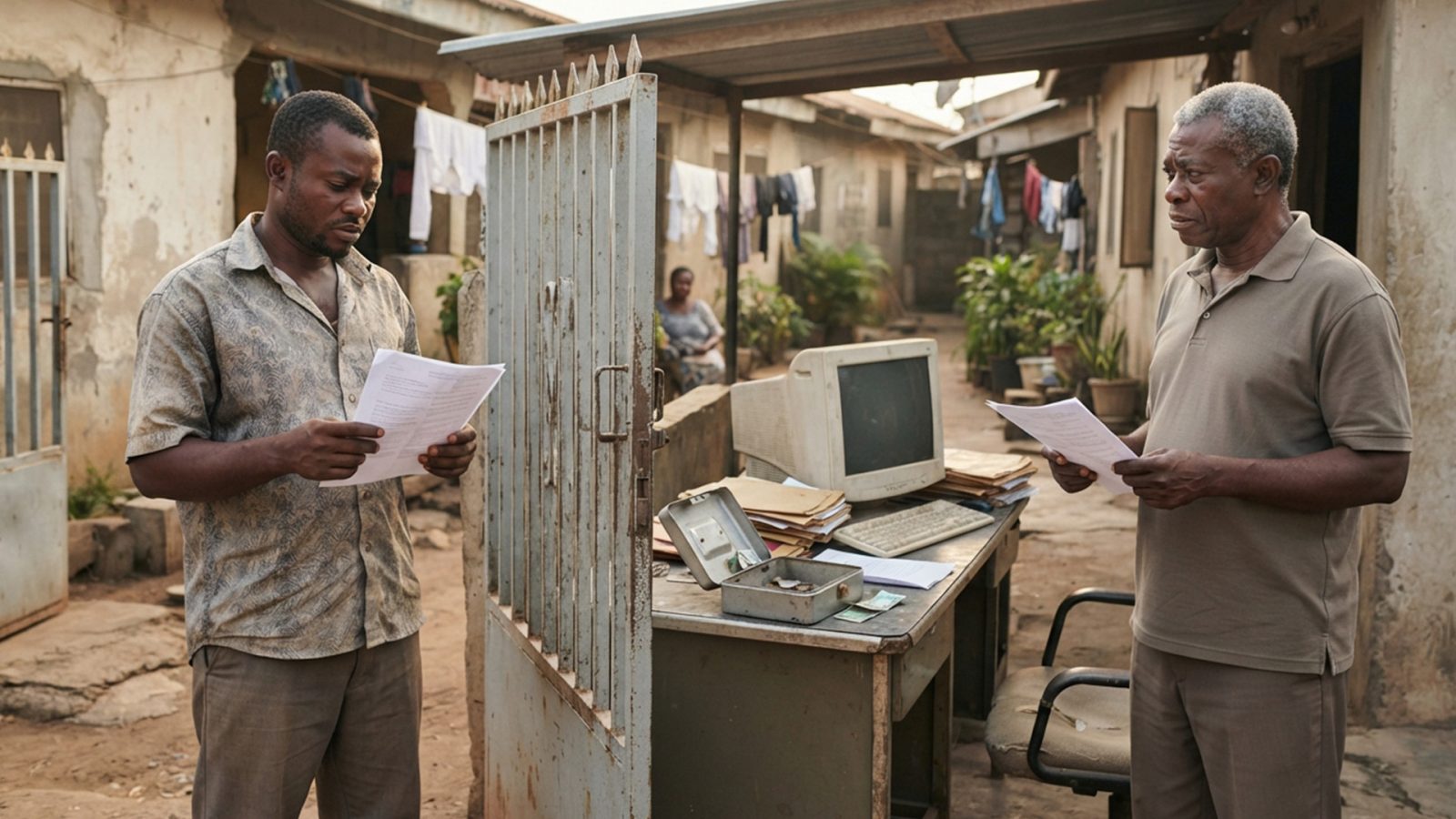
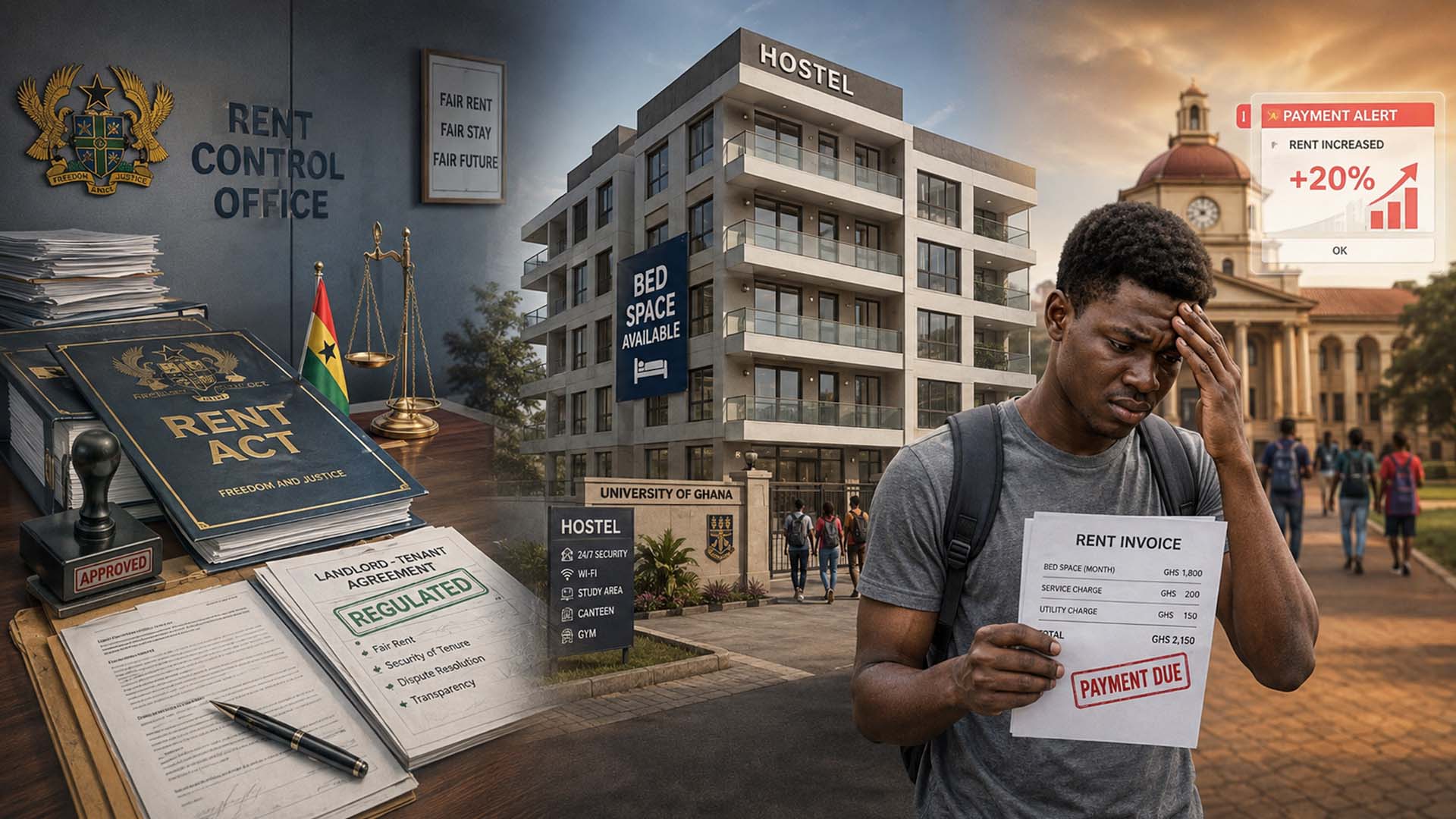
When a tenant faces an eviction threat, a sudden rent increase or a dispute over advance payments, Ghana’s Rent Control Department should provide one of the first formal places to seek help. But the agency says it received only GH¢60,000 to operate its 66 offices nationwide during the first quarter of 2026.
Acting Rent Commissioner Frederick Opoku said the second-quarter allocation increased the total funding for the first half of the year to GH¢120,000, but he described the amount as inadequate for a department expected to respond to housing and tenancy complaints across the country.
“GH¢60,000 to run Rent Control for three months? What’s the meaning of this?” Mr Opoku said while speaking on Adom FM.
His question exposes a larger problem in Ghana’s rental market: tenants and landlords may have rights, but those rights mean little when the institution charged with helping to protect them cannot adequately run its offices.
A national mandate, a limited budget
The Rent Control Department handles a role that affects everyday life in Ghana’s towns and cities. It provides advice, helps parties mediate tenancy disputes and supports processes that can prevent disagreements over rent, arrears, eviction and occupation from escalating.
Tenants may approach the Department after a landlord raises rent unexpectedly, demands large advance payments or threatens eviction. Landlords may also need its support when tenants owe arrears, refuse to leave after an agreement ends or challenge a rent demand.
But the Department needs staff, communication tools, transport, office space, case records and public-education resources before it can provide those services consistently.
The first-quarter allocation works out to about GH¢909 per office for three months if distributed evenly among the 66 offices. That calculation does not account for differences in demand between locations, but it shows the scale of the funding problem Mr Opoku has raised.
A department with a national mandate cannot rely on an allocation that struggles to cover basic operational costs.
When institutions cannot respond, disputes move elsewhere
A weak dispute-resolution system does not make rental disputes disappear. It shifts them elsewhere. Tenants who do not expect a timely response may accept terms they believe are unfair, avoid reporting harassment or rely on informal arrangements. Landlords who cannot access quick mediation may seek other ways to recover arrears or regain possession of their property. In both cases, disputes can move from documented processes to verbal confrontations, informal agreements and, sometimes, expensive court cases.
That outcome serves neither side. A functioning Rent Control system can give tenants an accessible place to ask questions and seek mediation before a disagreement becomes a crisis. It can also help landlords follow clear processes when they need to address unpaid rent or recover a property lawfully.
The Department does not need to choose between tenants and landlords. It needs enough capacity to uphold the rules for both.
Rent Control cannot solve the crisis alone
Funding is only one part of the problem. Earlier this month, Mr Opoku said his office had received little response from state institutions it approached to collaborate on rent-related challenges. He said the Ghana Immigration Service was the only agency that had responded positively to the Department’s outreach.
Mr Opoku also said he had sought collaboration with the Bank of Ghana on rent dollarisation, but had not received a response to the Department’s proposal.
His comments highlight the number of institutions that shape Ghana’s rental market. Local assemblies influence planning and building enforcement. Housing agencies influence policy and supply. Financial regulators influence the wider environment in which rent gets priced and paid. The Lands Commission, courts and other public bodies also affect housing security and property disputes.
Rent Control can mediate individual cases, but it cannot independently increase housing supply, reduce construction costs, regulate all informal agreements or address every source of rental pressure. Government agencies need to coordinate if Ghana wants to treat rent as more than a private issue between a tenant and a landlord.
Funding should produce visible service
Mr Opoku has appealed to Finance Minister Dr Cassiel Ato Forson to review the Department’s budget and provide adequate support. Government should link any additional funding to clear public outcomes. The Department should be able to show how many cases it receives, how quickly it responds, how many disputes it resolves through mediation and where rental pressure is highest. It should also publish practical guidance that helps tenants and landlords understand their obligations before problems begin.
Better funding should improve more than an office balance sheet. It should improve access.
That could mean staffed offices, working phones, reliable case records, public education, faster mediation and better coordination with the institutions that handle land, housing, finance and local governance. It could also mean more reliable data on common disputes, including rent increases, advance-rent demands, arrears, maintenance complaints and eviction cases. Data will not fix the rent crisis on its own. But it can help government identify where the system breaks down and decide where to act first.
The cost of an absent referee
Ghana’s rent crisis will not disappear because people stop reporting it. It will continue in homes, compounds, courtrooms and communities across the country. The immediate issue is a budget: GH¢60,000 for 66 Rent Control offices in three months. The bigger issue is what that figure says about the country’s priorities.
When Rent Control lacks the means to respond, tenants may struggle to enforce their rights, and landlords may struggle to resolve disputes through lawful channels. The rental market becomes less predictable for everyone.
The question is not whether Ghana needs a Rent Control Department. It already has one. The question is whether Ghana will give it enough support to do the job.



 English
  French