
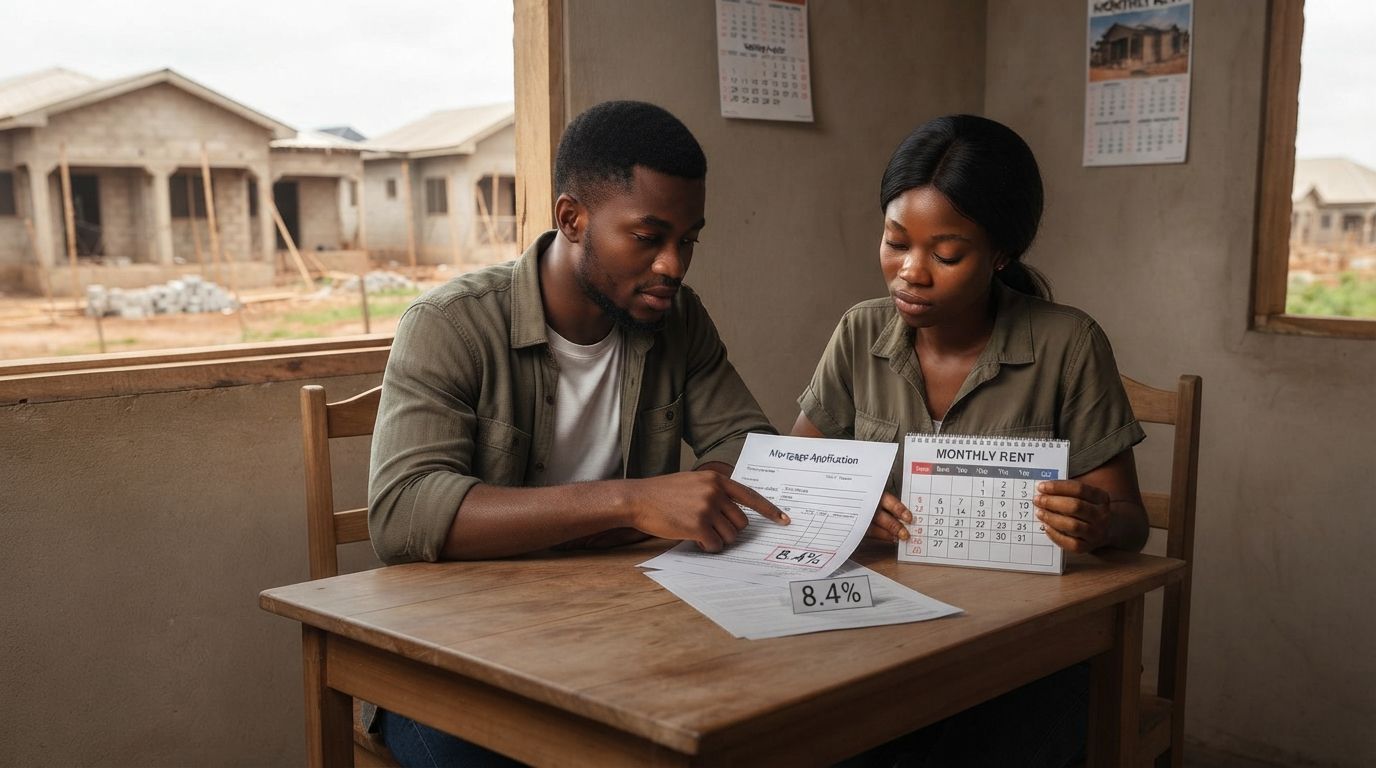
Ghana is betting that lower mortgage costs and new forms of rent support can help more people find a decent home. The National Housing Fund has reduced the interest rate under its National Mortgage Scheme from 13.5% to 8.4%, while President John Dramani Mahama has directed that GH¢1 billion be allocated in the 2027 Budget toward a proposed GH¢3 billion revolving housing fund. He has also announced plans for an Easy Rent programme to help eligible workers manage large rent advances through monthly repayments.
Together, the measures point to a wider housing-finance push: not only building more homes, but finding ways for households to pay for them. The crucial question is whether the programmes will reach people who are currently priced out of both homeownership and stable rental housing.
A lower mortgage rate, but what can buyers afford?
The 8.4% mortgage rate is down from 13.5%, and developer financing under the scheme has been reduced to 10.4%. NHF Chief Executive Prosper Hoetu said lending resumed in September following a review and a blended financing arrangement with partner financial institutions. The Fund says it has received more applications since lending resumed.
For a prospective buyer, however, the interest rate is only part of the calculation. Eligibility rules, income requirements, deposits, property prices, fees and repayment periods all affect whether a home loan is genuinely affordable. A lower rate can help, but it cannot make a property affordable if its price remains far beyond a household’s means.
Access is also a challenge for workers outside formal salaried employment. At the National Conference on Housing Finance, Hoetu said conventional requirements such as payslips and banking records can exclude informal-sector earners, even when they have regular income or verifiable business cash flow. He called for financing options that reflect the different circumstances of salaried workers, traders and young people.
A proposed fund to finance housing
Mahama has directed the Finance Minister to allocate GH¢1 billion in the 2027 Budget as the government’s contribution to a proposed GH¢3 billion National Housing Fund. The fund is intended to operate on a revolving basis, financing housing projects and supporting access to affordable homes.
The scale of the challenge is significant: Ghana’s housing deficit is estimated at 1.8 million units, and more than 30% of the existing housing stock is considered inadequate. Officials have also pointed to high construction costs and limited access to long-term financing as barriers to building and buying homes.
The fund’s impact will depend on how it is structured and who benefits. Financing developers could support more construction, but the resulting homes must be priced for households the policy is meant to serve. The government has also discussed mortgage refinancing, employer-supported housing, public-private partnerships and ways for lenders to assess informal workers using savings and business cash flows rather than relying only on payslips.
Easy Rent aims to ease upfront payments
The proposed Easy Rent programme is aimed at people who struggle to raise a large rent advance. Under the plan announced by Mahama, the National Housing Fund would pay the advance for eligible workers, who would then repay the amount in monthly instalments.
The idea addresses a real cash-flow problem, but key details remain to be announced. Renters will need clear information about eligibility, repayment periods, fees, landlord participation and what protections apply if a tenancy ends early or a dispute arises.
The President also outlined other possible approaches, including rent-to-own arrangements, support for people completing homes incrementally and social housing for vulnerable groups. These were presented as proposals within a broader housing strategy, not as fully detailed programmes with published terms.
The test is whether support reaches households
Ghana’s housing challenge is both a shortage of adequate homes and a shortage of accessible financing. The NHF says around 90% of housing delivery depends on people financing construction incrementally, with homes taking an average of 10 years to complete; the formal real-estate sector meets only about 10% of the country’s housing needs.
That helps explain why mortgage reform alone will not solve the problem. Buyers need appropriate homes at realistic prices; developers need dependable long-term funding; and renters need support with transparent, manageable repayment terms.
The lower mortgage rate and proposed fund could help expand financing, while Easy Rent could offer relief to some tenants. But their success will depend on implementation: clear eligibility rules, strong oversight and evidence that public support is leading to completed, occupied and genuinely affordable homes.

 French
  English